AgriS teams up with ITOCHU to advance alternative sweeteners
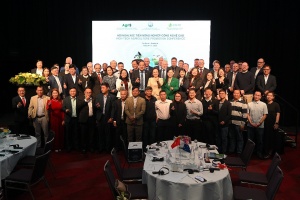
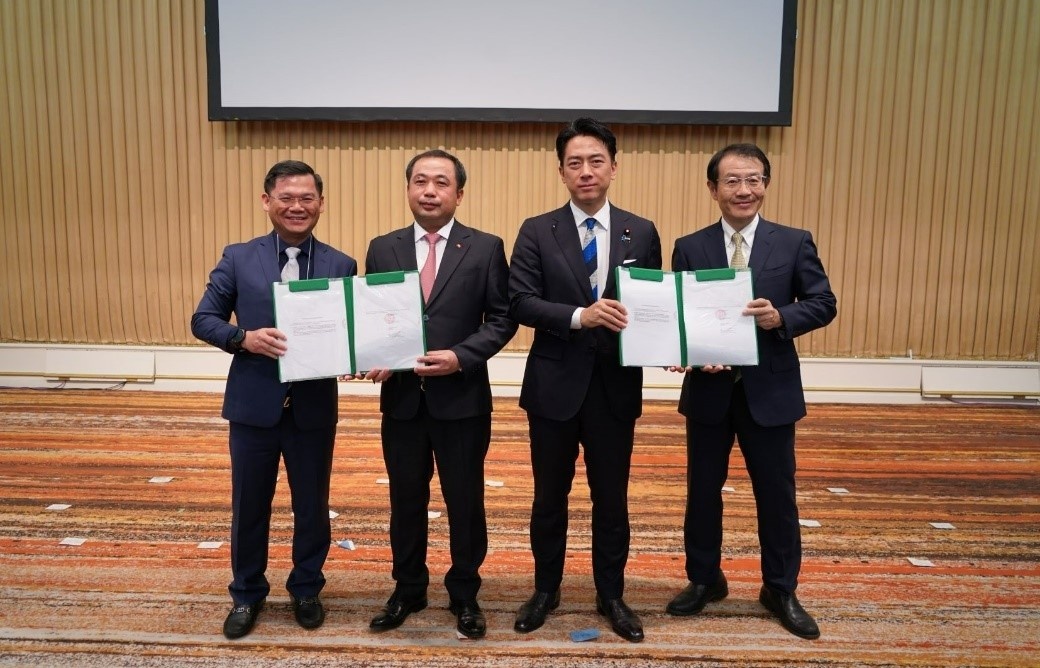
Tran Duc Thang, Acting Minister of Agriculture and Environment (second to the left), and Koizumi Shinjiro, Japanese Minister of Agriculture, Forestry, and Fisheries (third to the left), testified the MoU signing between AgriS and ITOCHU

The signing took place at the 6th Japan–Vietnam Public–Private Forum on September 4.

The agreement aims to enhance the supply of sustainable raw sugar while jointly developing and commercializing alternative sweeteners and functional ingredients, contributing to improved health for Vietnamese consumers.

Under the agreement, ITOCHU will strengthen its supply of raw sugar to AgriS and collaborate in researching and expanding the alternative sweetener market. By combining ITOCHU’s global sourcing network and expertise in alternative products with AgriS’ strong understanding of local consumers, the partnership will create new value that meets the growing demand for healthier nutritional choices in Vietnam.

Speaking at the event, Thai Van Chuyen, CEO of AgriS, emphasized, “AgriS highly values ​​the Vietnam–Japan Agricultural Cooperation Vision 2025-2030, which focuses on high technology, food security, and new-generation official development assistance. This aligns with AgriS’ commitment to building a green, clean, and smart agriculture sector. Through this collaboration with ITOCHU, we expect to further expand partnerships with Japanese counterparts in cross-border agricultural logistics projects, promote two-way agricultural trade, and deliver high-quality, health-beneficial products to global consumers.”

AgriS teams up with ITOCHU to advance alternative sweeteners
Thai Van Chuyen, CEO of AgriS

Headquartered in Tokyo, Japan, ITOCHU is one of the world’s oldest general trading companies with over 160 years of history and a presence in 61 countries. The group operates across multiple sectors, from trade and import-export to domestic and international investments, and is pursuing the strategy “The Brand-new Deal – Value Lies Downstream” to expand businesses that directly engage with consumers.

AgriS is Vietnam’s leading high-tech agricultural group, steadily transforming into a comprehensive agriculture solutions provider by integrating three technology pillars: agricultural technology, food technology, and fintech, all operated under internationally recognised environmental, social, and governance standards. In the context of rising consumer interest in health and the growing trend towards alternative sweeteners, this partnership underscores AgriS’ commitment to working with reputable global partners to deliver optimal nutritional solutions to the community.

AgriS builds leadership team for next strategic phase AgriS builds leadership team for next strategic phase

AgriS is strengthening its executive leadership as it enters a pivotal new phase in its drive to lead Vietnam’s high-tech agricultural transformation.

AgriS promotes high-tech agriculture cooperation between Vietnam and Australia AgriS promotes high-tech agriculture cooperation between Vietnam and Australia

TTC AgriSand its subsidiary Global Mind Australia (GMA), in collaboration with Tay Ninh People’s Committee, held a high-tech agricultural conference in Queensland, Australia on August 12.

AgriS aims to accelerate digitalization and datafication of agriculture sector AgriS aims to accelerate digitalization and datafication of agriculture sector

AgriS presented its solutions for agricultural modernization and digitalization to Prime Minister Pham Minh Chinh at the inauguration of the National Data Center on August 18.

CIT eligibility may help pull in investment
New tax frameworks are expected to help enterprises get more funding and expand domestic production, photo Le Toan

According to the draft decree on guiding the implementation of the Law on Corporate Income Tax (CIT), which has been submitted for approval, the Ministry of Finance proposes expanding incentives, extending periods of tax exemption and reduction, and applying lower tax rates for prioritised projects.

These aim to support businesses and promote investment in key sectors and priority areas.

Under the draft, enterprises with income eligible for incentives under this law will be exempt from CIT for four years and benefit from a 50 per cent tax reduction for the following nine years.

This exemption and reduction policy also applies to income generated from enterprises operating in vocational education and high-level skills training, provided they are located in incentivised areas.

If such enterprises operate outside these incentivised areas, the four-year tax exemption still applies, but the 50 per cent tax reduction is limited to a maximum of five subsequent years.

For certain other categories, the tax incentives are defined as a two-year exemption and a 50 per cent decrease for the following four years. In the case of new ventures in especially encouraged sectors, the government is authorised to extend the exemption and reduction period up to 1.5 times the standard duration mentioned above, provided that the total incentive period does not surpass the lifespan of the project.

The draft specifies that the tax exemption and reduction period is calculated from the first year the enterprise generates taxable income from the undertaking. If the enterprise does not have taxable income within the first three years of generating revenue, the exemption and reduction period will start from the fourth year.

The draft also includes detailed provisions regarding tax incentives for business expansion. If an enterprise expands its operations, whether by increasing scale, enhancing capacity, upgrading technology, reducing pollution, or improving the environment, any additional income generated from the expansion will receive the same tax incentives as the existing scheme for the remainder of the applicable period.

The draft decree also proposes a preferential tax rate of 10 per cent for 15 years for income from certain new projects in incentivised sectors or in areas with difficult or extremely difficult socioeconomic conditions. Eligible areas include high-tech zones, high-tech agricultural zones, dedicated digital technology parks, and economic zones subject to tax incentives.

Additionally, a 10 per cent tax rate without a time limit will apply to specific cases, such as enterprises operating in incentivised sectors within incentivised locations; publishers, cooperatives, and cooperative unions operating under current regulations; and media agencies carrying out activities aligned with priority sectors.

A tax rate of 15 per cent is proposed for income generated from specific business activities not located in incentivised areas.

For new initiatives in certain priority sectors, implemented in economic zones or areas with difficult socioeconomic conditions (but not in areas qualifying for special incentives), a preferential tax rate of 17 per cent will be applied for a period of 10 years. For certain specific activities, the 17 per cent tax rate may be applied indefinitely.

These consist of new investments with capital of $240,000 or more, those producing globally competitive products, achieving annual revenue of $800 million within five years of revenue generation, consistently employing 6,000 workers or more, or investing in essential economic and technical infrastructure.

The draft decree, once enacted, is expected to create momentum for the country to pull in more funding and expand domestic production.

Figures from the National Statistics Office showed that in the first seven months of 2025, the number of businesses registering to halt performance hit 88,600, up 13.6 per cent on-year.

Moreover, 41,500 enterprises halted operations to await dissolution procedures, up 16.7 per cent on-year; and 14,300 businesses completed such procedures, up 20.5 per cent on-year. On average each month, 20,600 enterprises left the market.

CIT law amendments boast exceptional sci-tech incentives CIT law amendments boast exceptional sci-tech incentives

Vietnam is drafting major changes to its corporate income tax legislation, offering unprecedented incentives in sci-tech and digital transformation.

Smaller businesses the focal point of CIT law amendments Smaller businesses the focal point of CIT law amendments

Hundreds of thousands of smaller enterprises in Vietnam are set to benefit from a reduction in corporate income tax from next year, meaning more opportunities to improve their competitiveness.

CIT specifics address smaller firms CIT specifics address smaller firms

Hundreds of thousands of micro- and small-sized enterprises in Vietnam will be entitled to a decrease in corporate income tax from this October, meaning more opportunities to ameliorate their competitiveness.

THACO unveils latest innovations at national showcase

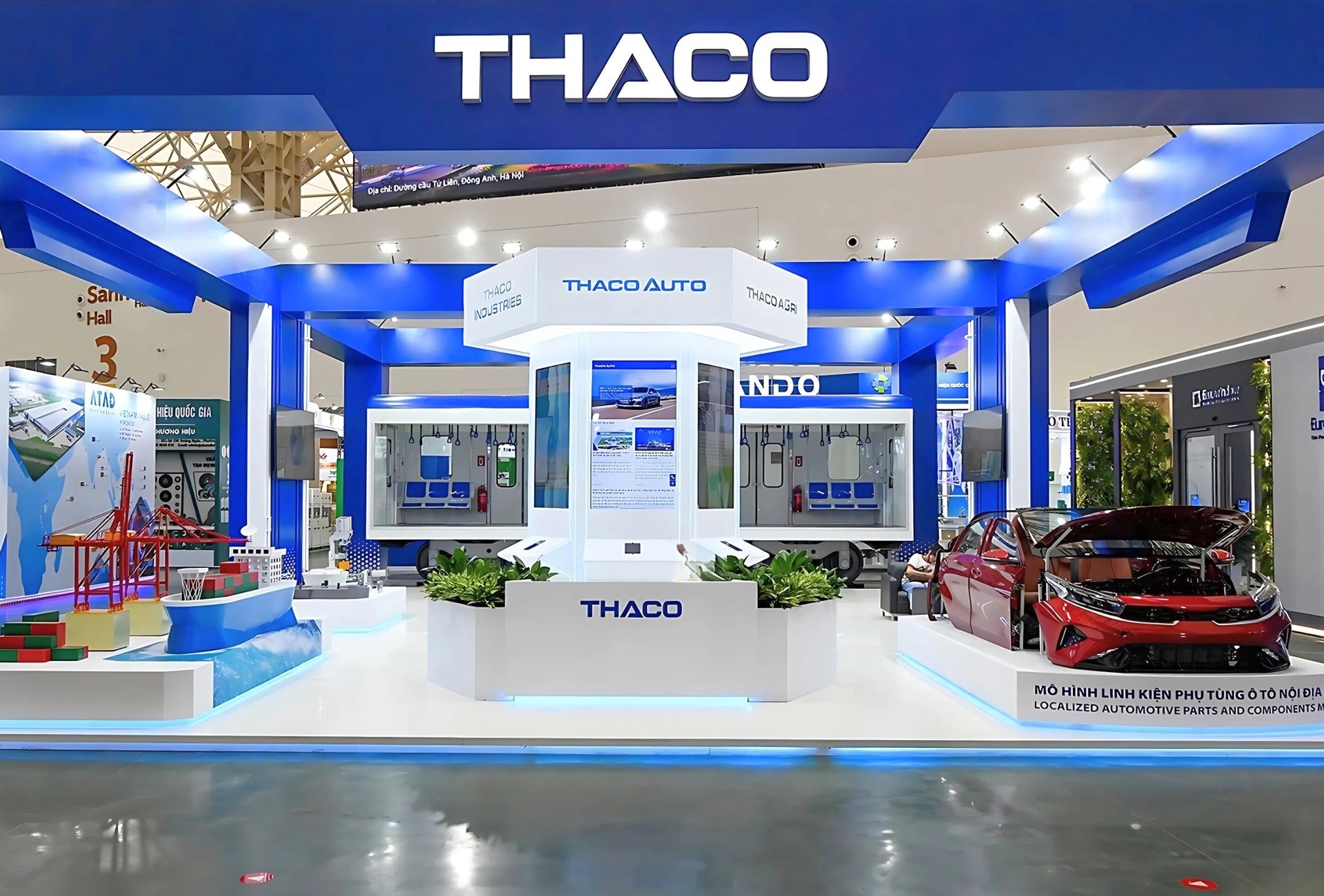
Running from August 28 to September 5, the exhibition highlights Vietnam’s achievements across multiple sectors. At its 200-square-metre booth, THACO is presenting products ranging from autonomous robots and ship-to-shore cranes to auto parts and components for export. The company has also unveiled an urban train carriage model, manufactured at the THACO Chu Lai Industrial Park, for the first time.

The carriage measures 10 metres in length, 2.95 metres in width, and 3.9 metres in height, with a weight of 10 tonnes excluding bogies. Designed with 26 seats and 124 standing places, it can carry up to 150 passengers.

The train body frame is made from high-strength steel and aluminium alloy. It is manufactured on a modern production line under a closed-loop process that covers fabrication, welding, surface treatment, and finishing paint, meeting international standards EN 12663-1, EN 14067-1, and EN 14067-4 for durability, safety, and aesthetics. This strategic step paves the way for THACO to enter the railway sector, the country’s spearhead infrastructure sector.

THACO also introduced the AI navigation assistant robot TIAR-01 at the event, featuring a modern design, omnidirectional movement, and an automatic SLAM navigation system. TIAR-01 boasts smart features, such as guiding and supporting visitors, looking up information, updating news quickly, interacting for entertainment, and monitoring environmental conditions.

THACO unveils latest innovations at national showcase

In parallel to this, the autonomous mobile robot AMR for transporting luggage is also equipped with SLAM navigation technology. It features flexible movement, obstacle avoidance, and real-time route calculation. Powered by a lithium battery, it operates for 6–8 hours. The robot is equipped with a 2D LIDAR sensor, bumper, 3D camera, and an emergency stop button to ensure maximum safety.

In the field of heavy machinery, THACO displayed the ship-to-shore (STS) crane model – equipment for loading and unloading container ships at international seaports. The STS cranes are 900 tonnes in weight, with a lifting capacity of 50 tonnes, a 40-metre reach, a lifting speed of 50m/minute, a hoisting speed empty of 120m/minute, and trolley speed of 150m/minute, ensuring high loading and unloading productivity.

THACO unveils latest innovations at national showcase

THACO also introduced a model of the Chu Lai seaport, part of THILOGI’s integrated logistics hub combining road, seaport, and maritime transport. Positioned as a key gateway for the central region, the port facilitates trade flows linking southern Laos, northern Cambodia, and Vietnam’s Central Highlands with major markets including China, South Korea, Japan, and India.

Among the standout exhibits was a model of the KIA K3 passenger car, built with parts and components manufactured by THACO Industries, including the body frame, interior and exterior elements, power systems, electrical equipment, and refrigeration units. Mechanical components for export, produced on advanced lines imported from Germany, Japan, Switzerland, and South Korea, are already being supplied to markets such as the United States, Australia, Japan, and Finland – strengthening the reputation of Vietnamese engineering internationally.

The TACO booth has been regarded as one of the exhibition’s highlights, showcasing the company’s latest products while demonstrating its strategy of sustainable development, increased localisation, and investment in advanced technology.

The exhibition further offered a platform for THACO to present nearly 30 years of accumulated technical and technological achievements. The products on display are designed for practical use, reflecting the group’s commitment to real work and real value.

THACO lays out plans for $1 billion industrial park THACO lays out plans for $1 billion industrial park

Truong Hai Auto Corporation (THACO) is planning to begin the construction of a mechanical industrial park in the southern province of Binh Duong worth over $1 billion in September.

THACO Group to invest over $1 billion in Binh Duong industrial park THACO Group to invest over $1 billion in Binh Duong industrial park

THACO Group will build a 786-hectare industrial park in Binh Duong at a cost of over $1 billion, with construction scheduled to start in September.

Italy deepens Vietnam ties as SACE backs Gelex and THACO's growth plans Italy deepens Vietnam ties as SACE backs Gelex and THACO’s growth plans

SACE, the Italian insurance and finance group fully owned by the Italian Ministry of Economy and Finance, together with HSBC and LBBW, has finalised two medium-long term loans totalling $139 million, guaranteed by SACE, for Gelex Group and THACO AGRI, two of Vietnam’s leading industrial players.

Since early August, Vietnam’s monetary market has shown fresh signals regarding interest rate trends. According to the latest report from Bao Viet Securities, deposit rates have inched up at several key maturities after remaining relatively low in previous months.

Specifically, the average six-month deposit rate rose by 0.01 percentage points to 4.48 per cent, while the 12-month rate increased from 5.04 to 5.07 per cent.

This trend highlights a divergence in the banking sector. While state-owned commercial banks have largely maintained deposit rates at major maturities, many private banks have adjusted rates upward to attract deposits.

For instance, at its July 31 rate adjustment, Eximbank raised deposit rates by 0.1 percentage points for terms of 12 months and above, leaving shorter-term deposits largely unchanged. TPBank also increased rates by 0.1 percentage points across all tenors below 12 months, reflecting an effort to remain competitive in attracting deposits.

Market data as of August 8 show deposit rates for short-term tenors of one to three months ranging from 1.6 to 4.1 per cent per year, medium-term deposits of six to nine months at 2.9-5.25 per cent, and 12-month deposits at 3.7-5.6 per cent.

Saigonbank offered the highest 12-month savings rate at 5.6 per cent, followed closely by BVBank at 5.55 per cent, while NCB, Nam A Bank, BAC A BANK, and Vietbank each applied 5.5 per cent.

According to Bao Viet Securities, these adjustments came shortly after the State Bank of Vietnam (SBV) convened a meeting with commercial banks in early August, reaffirming its commitment to a flexible monetary policy and sustained liquidity support. The SBV urged banks to implement measures to reduce deposit rates to stabilise the money market and create space for lower lending rates.

“With inflation under control and exchange rate pressures moderate, the SBV is likely to maintain operating rates, deposit rates, and lending rates at relatively low levels. This is considered one of the key tools to stimulate credit demand and support economic growth,” the report noted.

MB Securities’ (MBS) latest report also echoed this view, highlighting that after a modest dip in June, deposit rates began edging up again in July. TPBank, VPBank, and Eximbank raised their deposit rates by 0.1-0.2 percentage points per year across maturities ranging from one to 36 months.

“The upward adjustment reflects an ongoing imbalance between credit growth and deposit mobilisation,” the report said. “By July 29, system-wide credit had expanded 9.8 per cent compared with the end of 2024 and 19.8 per cent on-year, according to the SBV.”

Therefore, MBS estimated that credit growth currently outpaces deposit growth by 1.3–1.5 times, creating pressure on private lenders to raise deposit rates to maintain funding stability.

MBS expects deposit rates to remain under pressure for the rest of 2025, particularly after the SBV granted banks additional credit room to meet the economy’s capital needs. At the same time, the central bank continues to urge institutions to implement synchronised measures aimed at lowering deposit rates, thereby creating scope for reduced lending rates.

Market analysts largely share this assessment. Dinh Duc Quang, managing director of the Currency Trading Division at UOB Vietnam, said that credit growth, which had already approached 10 per cent in the first half of the year, could expand by 18-20 per cent for the whole of 2025 under the current interest rate environment.

However, he noted that commercial banks’ capacity to further reduce VND deposit and lending rates in the remaining months is limited, as August deposit rates were only 0.2-0.4 percentage points lower than the same period in 2024, depending on tenor.

“These levels remain broadly in line with international USD rates and recent USD/VND exchange rate developments,” Quang told VIR. He added that external conditions, such as modest tariff impacts and successful stock market upgrades attracting foreign capital, could potentially push VND rates down by 0.5-0.75 percentage points.

Nguyen Hoang Linh, head of Research at Vietcombank Fund Management, said that the scope for further interest rate cuts is narrow. “Given the divergence between credit growth and money supply growth, the room for commercial banks to continue reducing rates is limited, and any further cuts will largely depend on external factors,” he said.

Linh underlined the pivotal role of the SBV in balancing monetary objectives, noting that interest rates remain one of the most important tools in the central bank’s multi-objective policy. He added that sustaining low rates and stability also requires coordinated government efforts, including accelerated public investment, improvements to the investment climate, boosting exports, and market diversification.

The event attracted the participation of ministries, central departments and agencies, and leaders of localities; embassies and international organisations in Vietnam, along with leading scientists and experts, and domestic and international tech corporations.

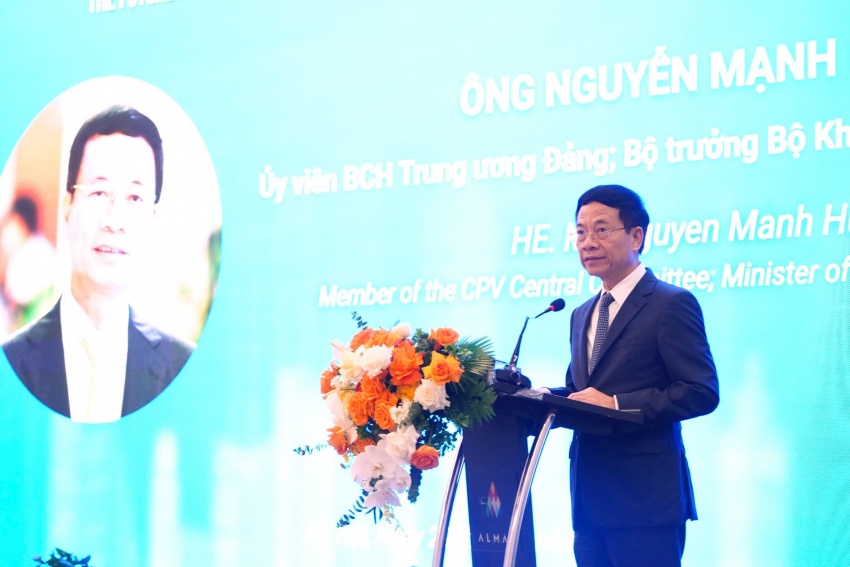
Making then opening speech, Minister of Science and Technology Nguyen Manh Hung said that over the past 80 years, science and technology have contributed to national development and integration. From achievements in agriculture, healthcare, and industry, to applications in daily life, science and technology have become a pillar closely associated with Vietnam’s development process.

Vietnam announces five major sci-tech initiatives
Minister of Science and Technology Nguyen Manh Hung. Photo: MoST

“Today, the new world context is posing great challenges and opportunities for Vietnam. We are entering the era of AI, big data, green energy, and a digital economy, an era in which knowledge, innovation, and technology become the most important production resources. In the previous century, natural resources and cheap labour were competitive, but now knowledge, technology, and innovation are the keys to determining the national position,” the minister said.

The event had four sessions. The first focused on discussing the future of sci-tech, with an emphasis on fundamental and strategic technologies.

The second delved into solutions to promote innovation and build a national innovative startup ecosystem.

Vietnam announces five major sci-tech initiatives
The launch of initiatives. Photo: MoST

The third discussed digital transformation, especially digital infrastructure and digital society, focusing on the future of national digital infrastructure, the application of digital transformation in state administration, healthcare, education, finance, and agriculture, and connecting digital transformation with innovation to drive double-digit GDP growth.

Session four focused on in-depth discussions about four topics: developing human resources for the future of sci-tech, innovation, and digital transformation; perfecting mechanisms, policies, and laws on sci-tech, innovation, and digital transformation; strengthening international cooperation; and promoting the leading role of technology enterprises.

At the forum, five major initiatives, creating a breakthrough foundation for the development of sci-tech in the digital age, were announced.

They included the science and technology exchange, the national initiative portal, a national strategic technology portfolio, Techfest 2025, and an annual report about the future of science, technology, innovation, and digital transformation to be released from 2026

Dialogue highlights role of innovation in advancing Vietnam's private economy Dialogue highlights role of innovation in advancing Vietnam’s private economy

Deputy Minister of Finance Nguyen Duc Tam has met with Boston Consulting Group (BCG) to deepen cooperation on policy development aimed at fostering Vietnam’s private sector.

Dassault Systèmes and Viettel ink MoU to boost Vietnam's high-tech sector Dassault Systèmes and Viettel ink MoU to boost Vietnam’s high-tech sector

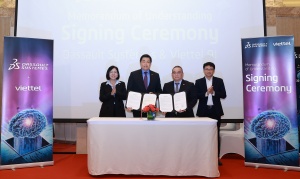
Dassault Systèmes and Viettel signed an MoU to strengthen strategic cooperation in AI, machine learning (ML), digital design, and simulation on August 20.

Hanoi forum to focus on future of sci-tech, innovation, and digital transformation Hanoi forum to focus on future of sci-tech, innovation, and digital transformation

The Ministry of Science and Technology (MoST) will host a forum about the future of sci-tech, innovation, and digital transformation in Hanoi on August 29, expecting attract to attract, domestic and international businesses, embassies, leading experts, and international organizations.

Daiwa Securities to increase stake in SSI amid private placement

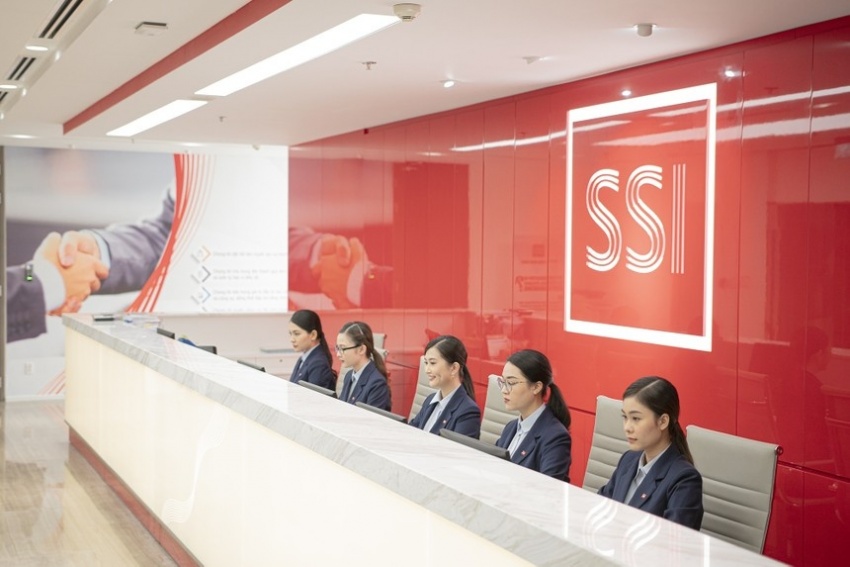
SSI, one of Vietnam’s leading securities firms, is conducting a private placement of 104 million shares to 18 professional investors, aiming to raise VND3.25 trillion ($130 million). Daiwa Securities has registered to buy nearly 16 million shares at VND31,300 ($1.25) each, a transaction worth over VND497 billion (around $19.9 million).

Daiwa Securities Group Inc. is already SSI’s largest shareholder, holding over 301 million shares, equivalent to over 15.25 per cent stake in the company. If the transaction is successful, Daiwa’s shareholding will increase to over 317 million shares. The transaction is scheduled to take place from August 29 to September 26.

Daiwa Securities Group is one of Japan’s ‘Big Four’ securities conglomerates, alongside Nomura, SMBC Nikko, and Mizuho. Established in 1902, the group operates in various sectors, including brokerage, investment, and asset management.

In 2011, Daiwa became a strategic shareholder of SSI by acquiring a 20 per cent stake. Last November, Daiwa exercised its right to purchase an additional 23.2 million SSI shares in a rights issue for existing shareholders.

SSI’s Board of Directors approved a plan on August 12 to offer more than 104 million shares in a private placement to 18 professional investors, including 14 institutions and four individuals.

At VND31,300 ($1.25) per share, the company aims to raise VND3.25 trillion ($130 million), with half allocated to investing in certificates of deposit and half for margin lending.

SSI recorded operating revenue of VND2.99 trillion ($119.6 million) in the second quarter of 2025, up nearly 30 per cent on-year. After-tax profit reached VND968 billion ($38.7 million), the highest in nearly four years.

For the first six months, SSI achieved revenue of VND5.15 trillion ($206 million) and profit of VND1.8 trillion ($72 million), up 20 per cent and 11 per cent respectively compared to the same period last year, surpassing 54 per cent of its annual target.

As of June 30, SSI’s total assets reached nearly VND92 trillion ($3.6 billion), an increase of VND19 trillion ($760 million) from the beginning of the year. Equity stood at approximately VND27.7 trillion ($1.17 billion), while margin lending hit a record of VND32.8 trillion ($1.3 billion), providing significant momentum for SSI to continue its strong performance in the upcoming quarters.

Sumitomo Corporation and SBI Holdings acquire stakes in FPT's AI Japan facility Sumitomo Corporation and SBI Holdings acquire stakes in FPT’s AI Japan facility

Sumitomo Corporation and SBI Holdings will each invest 20 per cent in FPT Smart Cloud Japan, a subsidiary of FPT Corporation.

SCGP acquires additional 30 per cent stake in Duy Tan Plastics SCGP acquires additional 30 per cent stake in Duy Tan Plastics

SCG Packaging Public Co., Ltd. (SCGP) announced on June 10 that it has strengthened its consumer packaging business through an investment in Duy Tan Plastics Manufacturing Corporation (Duy Tan JSC).

E-commerce credibility at stake as Vietnam moves to curb counterfeit goods E-commerce credibility at stake as Vietnam moves to curb counterfeit goods

Vietnam is set to tighten oversight of livestream sales and digital advertising amid rising concern over counterfeit goods on e-commerce platforms, in a bid to protect consumer trust and ensure fair competition.

Altri to acquire AeoniQ stake, scaling climate-positive textile yarn Altri to acquire AeoniQ stake, scaling climate-positive textile yarn

The deal accelerates global efforts to commercialise sustainable, carbon-negative fashion materials.

On 7 August 2025, the Government issued Decree No. 219/2025/ND-CP (“Decree 219”) on foreign employees working in Vietnam, replacing Decree No. 152/2020/ND-CP. The new Decree 219 is aimed at streamlining procedures and attracting more foreign experts, while maintaining stricter standards in certain areas.

A key reform under Decree 219 is the relaxation of experience requirements for expert positions. Foreign employees with a university degree or higher are now required to have only two years of relevant experience, instead of three as previously mandated. For degree holders in government-prioritized fields—such as finance, technology, innovation, and digital transformation—the requirement is further reduced to just one year.

Decree 219 also broadens the scope of exemptions from work permit requirements. Foreigners working in priority sectors, once confirmed by the relevant ministry or provincial authority, are no longer required to obtain a work permit but only need to file for confirmation of exemption eligibility.

Another major change is the integration of procedures for determining the demand for foreign workers and applying for a work permit. Previously, employers had to complete these steps separately, resulting in a statutory timeline of 15 working days. Under Decree 219, the process has been consolidated into a single step with a total processing time of 10 working days.

In contrast to these simplifications, Decree 219 introduces stricter rules on health certificates. Only certificates issued by medical institutions in countries or territories that have mutual recognition agreements with Vietnam will be accepted for work permit applications, replacing the previous general recognition of foreign certificates issued within 12 months.

Overall, Decree 219 reflects Vietnam’s effort to make its labor market more open and competitive for foreign professionals, while ensuring higher standards in health and compliance. The changes are expected to ease administrative burdens for businesses, shorten timelines, and create more favorable conditions for highly skilled foreigners to work in Vietnam.

On 17 July 2025, the National Assembly released the Draft Personal Income Tax Law (“Draft”), introducing substantial policy changes intended to align with Vietnam’s broader reform agenda and the rapid transformation of the global economy. If adopted, the new law would reshape the scope of taxable income, revise tax brackets, and adjust key deductions, reflecting both fiscal and social policy objectives.

One of the most notable proposals is the expansion of taxable income categories to capture emerging asset classes and transactions that had previously fallen outside the tax regime, resulting in revenue leakage. Under the Draft, income from the transfer of Vietnam national internet domains, emission reduction certificates, carbon credits, green bonds, automobile license plates obtained via auction (together with the associated vehicles), and digital assets—including virtual and tokenized assets—would become taxable. While most such income would be taxed at 5% on the portion exceeding VND 10 million, digital asset transfers would instead be subject to a flat 0.1% levy on transaction value.

The Draft also seeks to restructure the personal income tax schedule by reducing the number of brackets from seven to five, thereby simplifying the regime. Two alternative schedules have been proposed, both maintaining a progressive structure but adjusting the thresholds for middle- and high-income earners. The Ministry of Finance is currently seeking public feedback on which schedule should be adopted.

In recognition of inflationary pressures and the need to support households, the Draft proposes to increase family circumstance deductions. Taxpayers could claim up to VND 15.5 million per month (VND 186 million annually), while deductions for each dependent would rise to VND 6.2 million per month. This adjustment is intended to ease the financial burden on employees, boost disposable income, and stimulate domestic consumption.

Another key proposal relates to real estate transfer taxation. Where purchase price, sale price, and related expenses are verifiable, taxable income would be subject to a rate of up to 20%. In cases where these figures cannot be determined, tax would be calculated based on the holding period of the property. A progressive approach is suggested, with shorter holding periods (under two years) taxed at higher rates—up to 10% of transfer value—to discourage speculative transactions and stabilize the property market.

At this stage, all provisions remain proposals. The Ministry of Finance, in coordination with the Government, will continue to study, refine, and collect feedback from stakeholders before finalizing the law. These reforms, if adopted, would not only expand Vietnam’s tax base but also promote equity, support living standards, and help guide sustainable economic development.

In line with the Politburo’s Resolution No. 83-KL/TW dated 21 June 2024 on wage reform, the Government has submitted to the National Assembly for consideration the Draft Decree on Minimum Wages for Employees Working under Labor Contracts (“Draft”). Once adopted, the Draft will replace Decree No. 74/2024/ND-CP, which has been in effect since 1 July 2024.

The Draft proposes a 7.2% increase in regional minimum wages, raising monthly levels to VND 5,310,000 for Region I, VND 4,730,000 for Region II, VND 4,140,000 for Region III, and VND 3,700,000 for Region IV. This adjustment continues the Government’s policy of gradually improving employees’ living standards while ensuring wage growth keeps pace with socio-economic development.

In addition to the increase in wage levels, the Draft introduces an important structural change regarding the applicable scope of minimum wage areas. Following the restructuring of administrative units in July 2024, the classification will now be based on commune-level divisions rather than district-level divisions, thereby ensuring greater accuracy and consistency in the application of regional minimum wages.

The wage reform is expected to deliver tangible benefits for employees by raising incomes and supporting quality of life, while also contributing to broader social stability. For enterprises, however, the proposed increase will necessitate a careful review of payroll budgets, cost structures, and financial planning. Businesses are advised to prepare an adjustment roadmap in advance to ensure compliance and maintain operational efficiency.

On 14 August 2025, the Department of Home Affairs of Ho Chi Minh City issued Official Letter No. 1351/SNV-LDTLBHXH, providing guidance on the submission and management of enterprises’ Internal Labor Rules and Collective Labor Agreements under the city’s newly implemented two-tier local government model.

The Official Letter clarifies the allocation of authority for dossier registration and management. Foreign-owned companies are required to submit to the Department of Home Affairs of Ho Chi Minh City. Companies operating in export processing zones and industrial parks must submit to the Management Board of Export Processing and Industrial Zones. All other companies should file with the Division of Culture and Society under the commune/ward People’s Committee where their head office is located.

Enterprises may submit dossiers either directly or through the online public service portal, with electronic submission strongly encouraged as a means of reducing time and costs. The statutory processing timeline remains unchanged under the Labor Code 2019, i.e., no more than seven working days from the date of receipt of a valid dossier.

With this reallocation of responsibilities, enterprises should ensure that their dossiers are submitted to the correct authority to avoid delays or rejections. Companies are also advised to review the current status of their Internal Labor Rules and Collective Labor Agreements to ensure timely registration or amendment. In practice, businesses should be mindful that commune-level officials under the Division of Culture and Society may still be gaining familiarity with these procedures.