Second-quarter 2026 financial results released by several cement manufacturers point to solid business performance both during the quarter and in the first half of the year.

Accordingly, Vicem Ha Tien Cement JSC has reported second-quarter (Q2) 2026 net revenue of approximately $90.4 million, up 17 per cent on-year. Its pre-tax profit reached $6.73 million, an increase of 31.7 per cent on-year.

The result marked the company’s highest quarterly profit in the past five years, enabling Vicem Ha Tien to complete more than half of its annual profit target after the first half of the year.

Cement producers sustain growth as construction demand holds firm
Total cement and clinker consumption approximated 61 million tonnes in the first half of 2026, up nearly 16 per cent on-year

According to the company, the strong performance was driven by a 6.4 per cent increase in cement sales volume compared with the same period of 2025.

The company also recognised revenue from cost-recovery fees related to the construction of a road stretch connecting Nguyen Duy Trinh road to Phu Huu Industrial Park in Ho Chi Minh City.

For the first six months of 2026, Vicem Ha Tien posted net revenue of nearly $164.8 million and pre-tax profit of more than $10.8 million, representing on-year growth of 17.15 per cent and 109.5 per cent, respectively.

La Hien VVMI Cement JSC also reported improved results, saying cement sales volume rose about 12.4 per cent in Q2 as local property market showed signs of recovery.

In addition to higher average selling prices, which boosted revenue compared with the same period last year, the company’s financial income increased by nearly 63.6 per cent. Measures to improve productivity and reduce production costs also contributed to stronger profit growth.

The company’s net revenue reached $7.9 million, up 5 per cent on-year, while Q2 pre-tax profit rose 47 per cent to $1 million. In the first half of 2026, the company’s pre-tax profit totalled $1.12 million, an increase of 40.7 per cent from a year earlier.

Vicem But Son, which posted a pre-tax loss of $644,000 in the first half of 2025, returned to profitability with first-half 2026 pre-tax earnings of $564,000, including $440,000 in the second quarter alone.

Vicem Hoang Mai also reported positive results, recording first-half pre-tax profit of $320,000, up 1.5 per cent on-year.

According to data from the Vietnam Building Materials Information and Data Centre (BIDC), total cement production reached 58.14 million tonnes in the first half, an increase of around 9 per cent compared with the same period last year.

Total cement and clinker consumption reached 60.98 million tonnes, up nearly 16 per cent. Although June saw signs of slower market growth, cumulative first-half results continued to reflect solid underlying demand.

Domestic consumption totalled 41.58 million tonnes, up 16 per cent on-year, while total exports reached 19.4 million tonnes, an increase of 15 per cent. Export value was approximately $720.5 million, up 14 per cent from the same period last year.

BIDC also noted that market activities slowed in June, with production, domestic consumption and exports all declining slightly from the previous month, although remaining above levels recorded in June 2025.

The trend suggests that market demand has not weakened remarkably, but future growth is becoming increasingly dependent on public investment and exports.

During the remainder of the year, the cement industry’s outlook will hinge on the pace of infrastructure investment disbursement, the recovery of the property market and developments in international freight costs.
Businesses face challenges in greenhouse gas inventories Businesses face challenges in greenhouse gas inventories

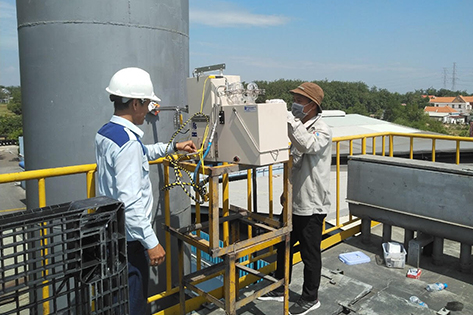
Enterprises, particularly in the thermal power, cement, and iron and steel sectors, face major challenges in compiling greenhouse gas inventories due to fragmented data systems, inconsistent activity data, and a lack of dedicated personnel.

Thailand cuts 3.8 million tonnes of CO2 via low-carbon cement Thailand cuts 3.8 million tonnes of CO2 via low-carbon cement

Thailand reduced more than 3.8 million tonnes of CO2 through low-carbon cement adoption, exceeding its nationally determined contribution targets and advancing a collaborative public-private Net Zero model.

Cement firms maintain pessimistic outlook Cement firms maintain pessimistic outlook

Cement firms across the country continue to face tough times with dwindling consumption amidst the stagnant real estate market, reduced residential project deployment, and shrinking exports.

Cement firms aspire for better performance following policy move Cement firms aspire for better performance following policy move

A new policy aimed at addressing the challenges facing the production and consumption of construction materials, particularly cement, is expected to help the sector boost consumption and improve revenue over the rest of this year.

Vietnam’s reforms earn international recognition as government reviews July performance
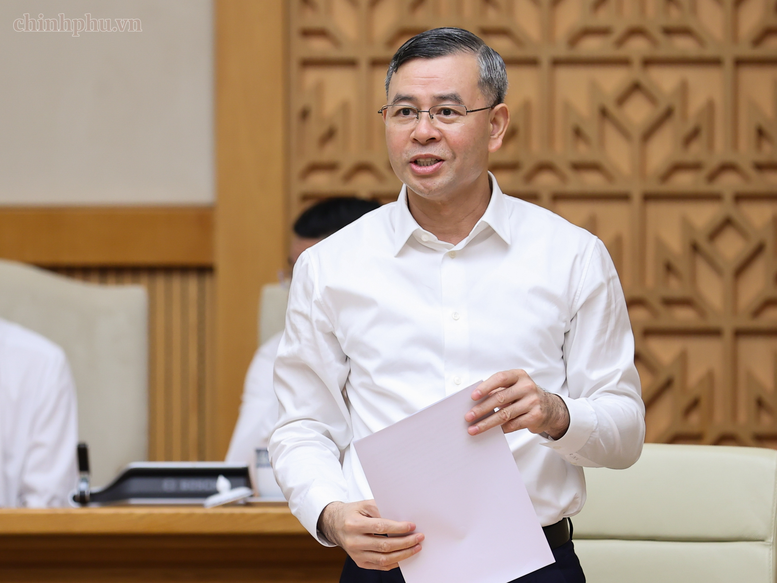
Minister of Finance Ngo Van Tuan. Photo: VGP/ Nhat Bac

International organisations raise Vietnam’s growth outlook

According to the Ministry of Finance (MoF), the global environment remains volatile, with slowing growth in major economies, renewed tensions in the Middle East pushing up oil prices, and the United States imposing additional tariffs of 10-12.5 per cent on imports from 60 economies.

Domestically, following the third plenum of the Party Central Committee, the government has accelerated new policies. International organisations have continued to commend Vietnam’s reform efforts and have revised their forecasts for the country’s GDP growth upwards.

Macroeconomic conditions remain broadly stable, with inflation under control. The consumer price index fell 0.1 per cent in July from the previous month, while average inflation for the first seven months was estimated at 4.39 per cent on-year, remaining within the government’s annual target.

Supplies of electricity and petroleum products were secured, while domestic fuel prices remained relatively low compared with regional markets thanks to tax and fee measures.

Monetary policy, exchange rates, and interest rates continued to be managed proactively amid external pressures, helping improve short-term banking system liquidity. Capital market development also continued, with registered capital mobilisation reaching an estimated $16 billion, up 25.9 per cent on-year.

State budget revenue in the first seven months was estimated at $71 billion, equivalent to 72.5 per cent of the annual target and up 16 per cent from a year earlier. The government also completed the allocation of more than $103 billion in medium-term public investment capital.

Public investment disbursement reached $16 billion during January-July, equivalent to 41.9 per cent of the annual plan, up $3 billion from the same period last year.

Registered foreign direct investment totalled $38.06 billion in the first seven months, up 50.9 per cent on-year, while realised FDI reached $15.2 billion, an increase of 11.8 per cent. Total import-export turnover was estimated at $659.6 billion, up 28.1 per cent.

Agriculture maintained stable production, while the industrial production index rose 11.4 per cent in the first seven months, the highest growth since 2019. Retail sales and consumer service revenue increased 13.1 per cent during the period, in line with the government’s annual target, while international arrivals reached a record 13.92 million, up 13.7 per cent.

187,200 enterprises entered the market during the first seven months, up 7.5 per cent, exceeding the 155,300 businesses that exited the market.

Government steps up reforms

Minister Tuan said the government had continued rolling out Conclusion No.18-KL/TW, focusing on improving institutions, enhancing the investment climate, upgrading infrastructure, and attracting investment from all economic sectors.

During the first seven months, the government and the prime minister issued 387 legal documents, including 47 in July alone, while accelerating draft legislation and resolving long-delayed projects.

The government also launched a 100-day action plan to remove bottlenecks in digital transformation and completed a review resulting in a catalogue of more than 3,000 standards supporting strategic technology development.

Despite the positive results, the MoF said industrial production growth remained around 0.6 percentage points below the level required to achieve the annual target of 12-14 per cent.

Private consumption improved in July but remained relatively weak. Excluding price effects, consumption increased 7.5 per cent, only slightly above the 7.4 per cent recorded in the same period last year.

Projects continued to face localised labour shortages, rising labour and material costs, and weather-related disruptions to public investment disbursement. Five ministries and localities recorded disbursement rates below 10 per cent or had yet to disburse public investment funds.

Inflation management remains challenging as price pressures typically increase towards the end of the year and global oil prices remain volatile. Lending interest rates have continued to rise, while the banking sector faces ongoing liquidity pressure. Delays in issuing implementing regulations also persist.

Key priorities for rest of year

The MoF proposed eight priorities to support growth during the rest of the year. On fiscal policy, the government will continue tax and fee support measures for businesses and households, adjust fuel taxes where necessary, accelerate public investment disbursement, and tighten recurrent spending.

The State Bank of Vietnam will maintain stability in the monetary and foreign exchange markets, manage credit growth flexibly, stabilise lending rates, improve access to finance, accelerate bad debt resolution, and strengthen banking supervision.

The Ministry of Industry and Trade will continue managing domestic fuel prices, ensure energy security, assess trade imbalances, and maximise the benefits of Vietnam’s free trade agreements while working with relevant agencies to address issues arising during trade negotiations with the United States.

Local authorities will also continue reducing administrative procedures, logistics costs, and compliance burdens for businesses, while accelerating key transport infrastructure projects, including Long Thanh International Airport, boosting private investment, improving the business environment, advancing institutional reform, and implementing the government’s 100-day digital transformation programme.

Vietnam urged to upgrade FDI quality as global production chains restructure Vietnam urged to upgrade FDI quality as global production chains restructure

Global production networks are undergoing profound restructuring under the combined impact of tariff policies, AI, and growing concerns over supply chain security. As competition among major economies shifts from low-cost manufacturing to technological capability, Vietnam needs to improve the quality of foreign direct investment, strengthen its industrial ecosystem, and develop domestic enterprises to move up global value chains.

Economy needs 11.9 per cent growth in H2 to achieve 10 per cent GDP target for 2026 Economy needs 11.9 per cent growth in H2 to achieve 10 per cent GDP target for 2026

Vietnam’s economy will need to grow by around 11.9 per cent in the second half of 2026 to achieve the government’s 10 per cent GDP growth target for the full year. However, this is not simply a matter of accelerating growth. It also requires keeping inflation under control, maintaining macroeconomic stability, and improving the quality of growth.

The Next Wave of Startups (NWoS) Incubation Program 2026 was announced at the Founders’ Meetup #1 policy seminar in Ho Chi Minh City on July 31.

The event provided a comprehensive overview of Vietnam’s policies supporting startups and innovation, while offering practical guidance on how startups can effectively access resources across the innovation ecosystem.

According to Dinh Xuan Tu, acting director of the Technology Incubation Centre under the Department of Startups and Technology Enterprises at the Ministry of Science and Technology (MoST), developing a vibrant startup and innovation ecosystem, particularly technology spin-off enterprises, is increasingly important as science and technology, innovation, and digital transformation become key drivers of economic growth and national competitiveness.

“Under new resolutions and relevant directives, the Department of Startups and Technology Enterprises has led the formulation of key policies to foster innovation and technology enterprise development,” Tu said.

According to the MoST, Vietnam’s innovation startup ecosystem has made significant progress, with around 4,000 innovative startups, nearly 210 venture capital funds, close to 200 incubators, and approximately 1,000 enterprises certified as sci-tech businesses. In addition, more than 40 technology spin-offs have been established from research institutes, universities, and corporations.

However, from a public administration perspective, Tu noted that the number of technology spin-offs in Vietnam remains well below the country’s research and innovation potential.

“The commercialisation of research outcomes continues to face significant challenges. Limited access to capital, expert support, markets, and government support policies remains a major obstacle for many startups and technology spin-offs. These are also the issues that policymakers are working to address by refining mechanisms to create a more enabling environment for innovation and enterprise development in the years ahead,” he said.

Nguyen Dac Binh Minh, deputy director general of the National Academy for Advanced Techonogy and Innovation under the MoST, said Vietnam needs to foster a new entrepreneurial mindset, encouraging young people to seek employment after graduation and become founders and leaders of future technology enterprises and corporations.

According to Minh, the government is shifting from a regulatory mindset to a development-oriented, enabling approach that recognises businesses and innovation as key drivers of economic growth.

“Alongside the new legal framework, the government is introducing a range of policies to strengthen the innovation ecosystem. These include regulations on the National Venture Capital Fund, financial mechanisms for science, technology and innovation, public-private partnerships in sci-tech, technology market development, as well as policies to support startups and innovation networks,” Minh said.

Following its inaugural edition in 2025, the Next Wave of Startups initiative, launched by WorkFlow, the Open Innovation & Technopreneur Institute, and partners to support Vietnam’s and the region’s startup ecosystem, has entered a new phase with the launch of the NWoS Incubation Program 2026.

While the 2025 edition focused on identifying and selecting promising startups through a competition format, the 2026 programme marks a shift towards a comprehensive incubation model. The initiative is designed to support startups in refining their business models, expanding into new markets, and strengthening their long-term growth potential.

The 2025 NWoS offering attracted nearly 200 applications, bringing together almost 40 local and international experts and mentors, as well as more than 1,000 participants, including representatives from organisations, businesses, and international partners. These outcomes reflected the strong interest of the startup community while providing organisers with valuable insights into the evolving needs of Vietnamese startups as they move into their next stage of development.

As Vietnam’s innovation ecosystem continues to mature, an increasing number of startups have progressed beyond the ideation stage, with early products already in the market. They are now facing more complex challenges, including validating business models, acquiring enterprise customers, expanding into new markets, and preparing for fundraising rounds. In response, the programme has evolved into an incubation model focused on providing long-term, hands-on support, rather than limiting its role to identifying and selecting promising startups.

New programme addresses changing startup landscape
Private capital market shifts from growth-at-all-costs to patient capital Private capital market shifts from growth-at-all-costs to patient capital

As Vietnam’s private capital market matures, investors are shifting their focus from aggressive expansion to long-term, sustainable growth. At the VIPC Summit on May 28, Nguyen Thanh Thao, CEO of Thien Viet Securities (TVS) explained why ‘patient capital’ – capital focused on governance, operational resilience, and sustainable value – is becoming the new benchmark.

Capital concentrated in later-stage startups, leaving funding gaps for early ventures Capital concentrated in later-stage startups, leaving funding gaps for early ventures

Capital remains available for Vietnam’s innovation economy, but it is becoming increasingly concentrated in later-stage companies, exposing critical funding and exit gaps that could constrain the next generation of startups.

Photo: Vincom Retail

On July 29, Vincom Retail released its consolidated financial statements for the second quarter, reporting net revenue of approximately $91 million, up 11 per cent on-year.

Revenue from shopping mall leasing and related services reached around $87.2 million, an increase of 10 per cent on-year. The growth was driven by an improvement in the occupancy rate, which rose 2.3 percentage points to 88.6 per cent at the end of the second quarter, a slight increase in average rental rates across the portfolio, and contributions from shopping centres opened in the second half of 2025.

Excluding the performance of Vincom Center Nguyen Chi Thanh, leasing and related service revenue increased 11.5 per cent on-year during the quarter.

In addition to its core business, financial income remained a key earnings driver. Financial revenue rose 25 per cent on-year to approximately $32.5 million in the second quarter, bringing the total for the first six months of 2026 to around $65 million.

The largest contributor to financial income was interest earned from deposits, loans, and deposits paid, totalling approximately $32.7 million during the quarter. Meanwhile, financial expenses declined 18 per cent to around $8.5 million, including interest expenses of approximately $7.7 million.

After accounting for expenses and taxes, Vincom Retail posted net profit of approximately $61.9 million in the second quarter, up 30 per cent compared to a year earlier.

The company said its adjusted consolidated net revenue, calculated by adding pro forma revenue from the transfer of investment property recorded in the first quarter to reported net revenue, and first-half after-tax profit had respectively fulfilled 49 per cent and 58 per cent of its full-year 2026 targets.

Part of the Vingroup ecosystem, Vincom Retail operates the country’s largest shopping mall network, comprising 90 shopping centres across 31 provinces and cities with a total gross floor area of nearly 1.91 million square metres.

For 2026, the company targets revenue of approximately $390 million and after-tax profit of around $207 million.

According to the company, Vincom shopping centres welcomed 112 million visitors in the first half of the year, while its commercial streets attracted 4.2 million visitors, representing on-year increases of 11.6 per cent and 16.3 per cent, respectively.

In the third quarter, Vincom Retail plans to continue expanding its network with the opening of Vincom Plaza Dan Phuong, which is scheduled to commence operations in August.

Vingroup divests from Vincom Retail Vingroup divests from Vincom Retail
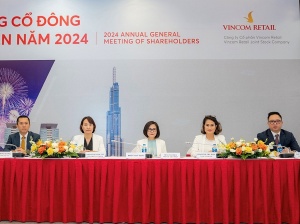
Vincom Retail retains brand name following Vingroup divestment Vincom Retail retains brand name following Vingroup divestment

Vincom Retail poised for growth Vincom Retail poised for growth
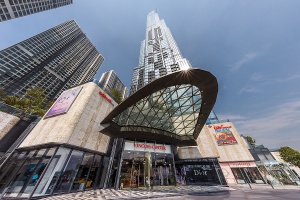
Vincom Retail named among Forbes Vietnam's top 25 leading brands Vincom Retail named among Forbes Vietnam’s top 25 leading brands

Vincom Mega Mall Ocean City – a “rookie” magnet for international brands Vincom Mega Mall Ocean City – a “rookie” magnet for international brands

Vincom Mega Mall Ocean City unveils lineup of unprecedented experiences Vincom Mega Mall Ocean City unveils lineup of unprecedented experiences
Vincom Retail transfers ownership of Vincom Centre Nguyen Chi Thanh Vincom Retail transfers ownership of Vincom Centre Nguyen Chi Thanh

Vincom Retail Debuts Multi-Experience Commercial Concept Vincom Retail Debuts Multi-Experience Commercial Concept