SYDNEY, Aug. 21, 2025 /PRNewswire/ — Manhattan Associates Inc. (NASDAQ: MANH) has promoted Raghav Sibal to Vice President, APAC, a newly expanded role that reflects the company’s commitment to supporting rising demand across the region. The move follows a standout year of growth, with cloud subscription revenue in APAC rising 49% year-on-year in 2024 and services revenue up 21%, reflecting the region’s growing appetite for cloud-first, AI-enabled supply chain solutions.

“Over the past 14 years, Raghav has played a pivotal role in establishing Manhattan Associates’ strong foundation and continued growth in Australia and New Zealand. With the APAC region undergoing rapid transformation and expansion, the time is right to elevate his role,” said Eric Clark, President and CEO at Manhattan Associates. “He brings the operational expertise, customer-first mindset and regional insight needed to accelerate our vision for unified supply chain commerce across Asia-Pacific.”

With more than two decades at Manhattan Associates, Sibal brings deep operational experience to the position, having worked across both the US and Australian markets, leading some of the company’s most complex global implementation programs. Since taking on leadership of the Australia and New Zealand business in 2011, he has overseen significant growth, built a high-performing local team, and helped position Manhattan as a trusted technology partner for leading retailers, distributors and logistics providers across the region.

“APAC is an incredibly diverse region, with each market presenting unique challenges and opportunities,” commented Sibal. “As supply chains continue to evolve and digital transformation accelerates, I’m excited to work closely with our teams, partners and customers across the region to help them unlock new levels of efficiency, resilience and customer experience.”

Manhattan Associates’ APAC operations service emerging opportunities in China, Southeast Asia, and India, as well as more established markets in Japan, Australia and New Zealand.

For more information about Manhattan Associates, visit www.manh.com.au. Receive up-to-date product, customer and partner news directly from Manhattan Associates on X, LinkedIn and Facebook.

For more information, please visit www.manh.com

One of the latest initiatives is a three-year project led by food ingredients manufacturer BENEO, in partnership with the non-governmental organisation Rikolto and climate-tech company CarbonFarm, announced in late July.

Green deals help level up agriculture
Government support for low-carbon agriculture makes it an ideal environment for collaboration, Photo: Le Toan

Backed by a €800,000 (nearly $940,000) grant from the Flanders government in Belgium under the Flanders International Climate Action Programme, the initiative aims to encourage sustainable rice production in Vietnam.

The subsidy is used to cover the costs of training farmer cooperatives, monitoring and validating reductions in emissions and water consumption, as well as the separate logistics and processing of the final Sustainable Rice Platform (SRP)-verified rice.

Roland Vanhoegaerden, operations managing director for Speciality Rice Ingredients at BENEO, said, “Global demand for sustainable rice is rising, with SRP-certified supply now covering nearly 50,000 hectares and available in over 20 countries across Europe, Asia, and North America. As one of the world’s top rice exporters, Vietnam holds strong export potential but lacks verified sustainable supply chains.”

BENEO, Rikolto, and CarbonFarm are working to build an innovative value chain market model by connecting small-scale farmers to international markets and creating added incentives for cultivating SRP-verified rice.

Trained farmers are granted guaranteed purchase quantities for their SRP-verified rice. BENEO’s production site in Belgium will process at least 10,000 tonnes of this rice into high-quality starch, flour, and protein ingredients for the global food and pet food industries.

The project helps farmers meet international sustainability benchmarks, strengthening Vietnam’s positioning as a trusted supplier of SRP-certified rice. It also equips cooperatives to support farmers in scaling sustainable production. At the same time, successful business cases will be documented to inspire wider adoption of sustainable practices.

Also last month, the Dutch Fund for Climate and Development (DFCD) also approved origination support to HUSK, a pioneer in biochar-based fertilisers, to accelerate the company’s expansion in Vietnam.

DFCD provides funding to scale HUSK’s production capacity, invest in research and product development, and bring new biochar-based fertiliser formulations to both markets. This enables HUSK to prototype tailored solutions for major crops and support broader market adoption.

Nguyen Anh Tuan, general manager of HUSK Vietnam, said, “We are implementing a comprehensive scale-up plan in Vietnam, with a key component being the establishment of a new production facility. This plant will use locally sourced rice husk to manufacture biochar-based fertilisers tailored for Vietnam’s key agricultural regions.”

Alongside this, HUSK is forming research partnerships with leading institutions such as Can Tho University, Nong Lam University, and others to test and refine its products for crops like rice, coffee, durian, and bell pepper under real farming conditions.

Additionally, the company is also expanding its market presence through demonstration farms, farmer training, and direct engagement, while building strong distribution and offtake partnerships with cooperatives and agribusinesses.

Phuc Sinh Corporation also secured a funding of $15 million from the Dutch Entrepreneurial Development Bank in early April. Chairman Phan Minh Thong said, “With this funding, Phuc Sinh can raise its production capacity, invest in agricultural projects, apply advanced tech to the supply chain, and increase the value of products.”

According to data by the Ministry of Agriculture and Environment, the export value of agro-forestry-fishery products reached $39.68 billion in the first seven months of the year, up 14.7 per cent on-year. Key agricultural products recorded significant value growth than last year – coffee exports soared by 65.1 per cent to $6 billion, while cashew nut exports increased by 17.4 per cent to $2.79 billion.

Following that is pepper, with an export turnover of $1 billion, an on-year increase of 30 per cent. Rice exports saw a 15.9 per cent decrease in value to $2.81 billion due to a significant 18.4 per cent drop in price.

Vanhoegaerden from BENEO noted that the Mekong Delta faces severe climate risks yet remains vital to global rice trade. In this case, Rikolto, leveraging its long-standing partnership with local authorities, leads training for Vietnamese farmers, while CarbonFarm will deploy digital and satellite tools to support data collection and more.

“For these partners, Vietnam presents the opportunity to pilot scalable solutions that reduce environmental impact and support farmers while contributing to national and green goals,” Vanhoegaerden said.

TOKYO, Aug. 18, 2025 /PRNewswire/ — Ricoh Asia Pacific today announced the launch of AI Learning Week, a region-wide internal initiative designed to equip employees with practical AI capabilities, accelerate Microsoft Copilot adoption, the use of custom AI agents, and strengthen Ricoh’s leadership in shaping the future of work through responsible, applied artificial intelligence.

Ricoh Asia Pacific launches AI Learning Week 2025—an internal initiative, co-sponsored by Microsoft and Talogy, to accelerate AI adoption and shape the future of work.

Running from 18–22 August 2025 and co-sponsored by Microsoft and Talogy, a leading talent management solution provider, AI Learning Week will bring together over a thousand employees across Ricoh’s Asia Pacific operations for hands-on sessions, leadership panels, and solution showcases. The initiative reflects Ricoh’s belief that empowering employees with AI fluency is key to delivering lasting value for customers and deepening strategic technology partnerships.

“AI Learning Week isn’t just about upskilling—it’s about readiness,” said Kei Uesugi, Regional Director of Ricoh Asia Pacific. “By investing in our people and working alongside Microsoft, we are building the internal strength required to lead AI transformation across the region.”

A Strategic Framework for Regional Scale

Ricoh Asia Pacific’s AI strategy is built around a three-tiered innovation framework that supports varying levels of customer AI maturity and business need. This includes:

  • Pre-Configured Solutions such as AI-enabled multifunction devices, intelligent document processing, and workflow automation
  • Enablement and Advisory Services to help organisations adopt AI responsibly and effectively
  • Advanced Applications using AI agents, large language models, and vertical-specific solutions tailored to customer challenges

This structure enables Ricoh to scale innovation efficiently across markets while encouraging local adaptation and capability-building.

Local Innovation, Regional Impact

Across the region, Ricoh operating companies are already delivering on this strategy through market-led innovation and practical application.

In Hong Kong, Ricoh has launched the Ricoh InnoAI Programme. Developed in partnership with Cyberport and the Ricoh Software Research Center Beijing, Ricoh InnoAI offers AI startups and enterprise partners access to a purpose-built R&D centre, commercialisation pathways, and advanced infrastructure to accelerate innovation.

“Through InnoAI, we are building a business-ready AI ecosystem, anchored in Hong Kong, ready to scale and support customers across the region”, said Ricky Chong, Managing Director of Ricoh Hong Kong. “We are excited to be working at the intersection of technology, talent, and trust; to attract new talent, and help our customers grow.”

In New Zealand, Ricoh has solidified its position as a leader in enterprise AI adoption and Microsoft Copilot deployment. As a certified Microsoft Solutions Partner across Data & AI, Infrastructure, Modern Work (SMB), and Security (SMB), Ricoh New Zealand has met Microsoft’s highest standards for capability, performance, and customer success. This recognition enhances Ricoh’s credibility in the Microsoft ecosystem and reinforces its role as a trusted advisor to customers seeking secure, scalable, and productivity-enhancing solutions.

Building on this foundation, Ricoh New Zealand has implemented structured Copilot programmes across key business functions—including finance, marketing, customer operations and digital services. These deployments are supported by comprehensive AI readiness assessments that help define business needs, identify adoption barriers, and prioritise use cases. The insights gained feed into enablement frameworks and real-time feedback loops that drive continuous improvement, both internally and for Ricoh’s customers.

This hands-on experience—underpinned by its Solutions Partner credentials—has positioned Ricoh New Zealand as a strategic contributor to Ricoh’s go-to-market model in the Asia Pacific region with Microsoft, translating product capability into practical, scalable business outcomes.

Leo Liu, General Manager, Microsoft Hong Kong and Macau, added: “Microsoft is delighted to collaborate with Ricoh for AI Learning Week, empowering teams across the Asia Pacific region to unlock the full potential of AI Agents. Through hands-on sessions and real-world demonstrations, we are committed to supporting Ricoh in harnessing the power of Microsoft Copilot and custom AI agents. Our aim is to drive innovation, enhance productivity, and transform the way work gets done—today and for the future.”

As Ricoh continues to invest in its people, platforms and partnerships, AI Learning Week serves as a timely demonstration of how strategic enablement at scale can power the next phase of workplace transformation across Asia Pacific.

For further information, please visit www.ricoh.com

Amid rising trade tensions and the resurgence of economic nationalism, Vietnam is rapidly emerging as a key hub for firms aiming to reduce tariff exposure and enhance operational efficiency. This transformation goes beyond relocating production, it reflects a broader reconfiguration of the country’s industrial and logistics landscape.

Businesses navigating tariffs and industrial opportunity
Dennis Yeo, head of Investor Services, Logistics, and Industrial at Cushman & Wakefield Asia-Pacific

The revised US tariff framework has prompted a wave of global business recalibration. Initially, Vietnam faced challenges when early drafts proposed a 46 per cent rate on its exports. However, after negotiations, the rate was reduced to 20 per cent, restoring investor confidence and reigniting momentum.

Tariffs are becoming a structural element of global trade. Rather than resisting them, companies are adapting by optimising supply chains to absorb these new costs.

Despite the added burden, businesses are beginning to treat tariffs as part of the new normal in an increasingly protectionist world. Companies will have no alternative but to accept tariffs as part of the cost and make their supply chain more efficient.

Following an initial pause, investment activity in Vietnam has resumed, particularly from smaller firms in the ASEAN region seeking new growth opportunities.

With over two decades of foreign direct investment in manufacturing, the nation offers a well-established industrial ecosystem. Its infrastructure, skilled labour force, and export-friendly policies provide a competitive edge over regional peers. Participation in multiple free trade agreements enhances market access, while ongoing administrative reforms improve the ease of doing business.

Standing out

For many multinational corporations, relocating operations to Southeast Asia has become essential. While expansion beyond their domestic market was already underway due to technological advancement and industrial maturity, tariff pressures have accelerated the shift.

Other economies in the region are also upgrading infrastructure and streamlining regulations to attract investment. However, Vietnam maintains a distinct advantage due to its low labour costs, favour access to major sea lanes, and stable economic environment.

According to our recent report 2025 Waypoint: Global Industrial Dynamics, which evaluated over 120 markets worldwide, Vietnam stands out as one of the few countries to rank among the most affordable markets globally for these key site selection factors. Although industrial rents in 2025 have increased by 70 per cent compared to 2019, actual costs remain highly attractive relative to regional peers. As of end 2024, average logistics real estate rents are approximately $5.30 per sq.m per month in Hanoi and $4.90 per sq.m per month in Ho Chi Minh City.

Logistics and manufacturing operations remain heavily reliant on human capital. A large, cost-effective labour force is a critical factor influencing site selection and operational strategy, from determining which processes to localise to the level of automation investment.

In Vietnam, labour costs are currently less than 25 per cent of the global median wage, placing the country among the most affordable labour markets in the Asia-Pacific region.

Meanwhile, electricity demand in modern logistics facilities is rising, driven by automation systems, smart management platforms, advanced material handling equipment, and the growing adoption of electric vehicles. As a result, operating costs are becoming an increasingly important consideration in decisions. Vietnam maintains its competitive edge, with industrial electricity prices among the lowest globally, only higher than Indonesia and Nigeria.

These advantages make the country particularly attractive to multinational corporations seeking to expand operations. The shift is no longer limited to final assembly, many firms are now considering full supply chain migration to capitalise on lower costs and policy stability, particularly in relation to transshipment tariffs.

One emerging opportunity lies in transshipment tax optimisation. Bonded warehouses and foreign trade zones allow goods to be stored without incurring tariffs until they enter the domestic market. These models offer flexibility and cost savings, especially for companies managing complex cross-border flows.

The most visible impact of this transformation is unfolding in the industrial real estate sector. Demand for industrial parks, logistics hubs, and warehouses is surging, particularly in key regions such as Ho Chi Minh City, Haiphong, Bac Ninh, and Binh Duong. This growth is being driven by the steady diversification of global supply chains.

Several milestones underscore Vietnam’s growing appeal during the 2018 trade war. One notable example is the launch of BW Industrial Development, a joint venture between global private equity firm Warburg Pincus and local developer Becamex IDC, which marked a turning point in the country’s industrial real estate landscape. This initiative significantly expanded the supply of ready-built factories and logistics infrastructure, signalling strong international confidence in Vietnam’s long-term potential.

That same year, the country continued to attract major global manufacturers. Samsung, for example, had already invested over $17 billion by 2018, establishing large-scale production facilities that became magnets for supporting industries. The presence of such industry leaders has helped elevate Vietnam’s position in global supply chains and encouraged a wave of follow-on investment. These developments align with the nation’s ambition to become a leading logistics and distribution hub in the region.

A decisive role

Further reinforcing this momentum, reports from Cushman & Wakefield and other consultancies confirm the country’s rising prominence in Southeast Asia’s industrial property market. The continued presence of global logistics firms and sustained foreign direct investment into industrial areas highlights the strength of this trajectory.

Today’s supply chains are no longer defined solely by physical assets. They are increasingly digital, data-driven, and automated. As more companies shift operations to Vietnam, they are also deploying advanced logistics technologies such as smart warehousing, reverse logistics systems, and AI-powered inventory management.

Tools like Internet of Things-enabled monitoring and cloud-based logistics platforms are helping businesses navigate trade volatility and improve operational performance. While adoption is still scaling, the presence of international firms is accelerating the country’s technological maturity.

One critical area is talent development. As supply chains become more automated and data-driven, demand for a digitally-skilled workforce will intensify. Investment in vocational training, STEM education, and industry-academia collaboration will be essential to meet the needs of advanced manufacturing and smart logistics operations.

At the same time, regulatory transparency and institutional efficiency will play a decisive role in shaping investor sentiment. Streamlined permitting processes, consistent enforcement of trade policies, and improved land-use planning can help reduce friction and accelerate project timelines.

Environmental sustainability will also become a competitive differentiator. As global corporations align with environmental, social, and governance commitments, Vietnam’s ability to offer green-certified industrial areas, renewable energy integration, and low-carbon logistics solutions will influence site selection decisions. Public-private partnerships in clean energy and circular economy initiatives could further enhance the country’s appeal.

To fully capitalise on the relocation wave, Vietnam must continue strengthening both its hardware and software foundations. This includes ongoing investment in multi-modal logistics infrastructure, integrating road, sea, air transport, and energy systems, as well as improvements in digital governance, vocational training, and administrative efficiency.

Digital transformation will underpin much of this progress. From blockchain-enabled customs clearance to AI-powered demand forecasting, the integration of smart technologies will be key to optimising performance and managing complexity. Government support for digital infrastructure and cybersecurity will be vital to ensure scalability and trust.

Long-term competitiveness will depend on reducing bureaucratic friction and enhancing the regulatory environment. Streamlined business processes and a skilled workforce will be essential to sustaining investor confidence and supporting a more sophisticated industrial ecosystem.

In the years ahead, Vietnam’s industrial real estate and logistics sectors are poised to evolve from cost-driven platforms into strategic enablers of global competitiveness. Success will hinge not only on physical assets, but on the country’s ability to deliver speed, reliability, sustainability, and innovation at scale.

Businesses shift to local supply chains and market diversification amid new US tariffs Businesses shift to local supply chains and market diversification amid new US tariffs

Vietnamese businesses are adapting to new US tariffs by investing in local supply chains, exploring new export markets, and innovating to maintain competitiveness in a challenging global landscape.

Mixed fortunes likely from US tariff fallout Mixed fortunes likely from US tariff fallout

Although the decision of the United States to impose new tariff levels on Vietnam is not as harsh as the rates suggested in April, they may still pose various challenges for Vietnamese exporters as well as economic growth.

Vietnamese exporters shift strategies amid new US tariffs Vietnamese exporters shift strategies amid new US tariffs

Vietnamese exporters are responding to new US tariffs with strategic shifts, turning pressure into opportunities for growth and diversification.

MELBOURNE, Australia, Aug. 18, 2025 /PRNewswire/ — Leaders from Australia’s environment sector have delivered a set of recommendations to the government ahead of its three-day economic roundtable this week.

The recommendations followed an environmental economic reform roundtable convened on Friday by the environment sector, in response to concerns over the lack of environmental input into the Treasurer’s Canberra event.

The roundtable was attended by CEOs and policy leaders from 25 organisations with key roles in nature conservation and land management in Australia, including Greening Australia, the Indigenous Desert Alliance, the North Australian Land and Sea Management Alliance, the Biodiversity Council, the Australian Wildlife Conservancy, WWF Australia, the Nature Conservancy, Landcare Australia and NRM Regions Australia.

Despite the environment underpinning Australia’s GDP and export earnings, there will only be minimal representation at the Canberra event, which aims to build consensus on strategies to boost productivity, enhance economic resilience, and strengthen budget sustainability.

Australian Land Conservation Alliance CEO Dr Jody Gunn said other industry groups had been engaged in earlier roundtables to feed into the Treasury discussions and agenda. “The environment sector had encouraged the Minister for Environment and Water, Murray Watt’s office to hold or co-host a discussion, and whilst this was not taken up, we were pleased to have a representative from Minister Watt’s office attend Friday’s roundtable.”

“Nature’s economic role is too important to leave out of national reform conversations. If we ignore nature, productivity suffers. If we invest in the solutions it brings, we all win — with stronger regional economies, better disaster resilience, and healthier communities.”

Among the recommendations are calls for stronger laws for nature that underpin long-term economic growth, a review of tax settings to incentivise conservation and environmental restoration activities, the need to embed connection with Country and draw upon the knowledge and relationship Indigenous Australians have with the land, and workforce planning for the environment sector.

Environment leaders warn that without nature-based investment and reform, the ongoing decline of our natural capital—soil, water, native vegetation, and biodiversity—will erode productivity, economic growth, and disaster resilience.

Dr Gunn emphasised, “Nature is essential economic infrastructure and through the roundtable recommendations, the environment sector is highlighting the need for it to have a key seat at the table for sustainable economic reform.”

“We’ll continue advancing nature-based solutions, delivering results on the ground, and working to make sure it is part of the broader economic reform conversation.”

“Failing to seize this opportunity would be outdated thinking: the economy does not exist in isolation from the natural world that sustains it.”

Key asks:

1. Put nature at the heart of economic planning and reform

Governments should treat nature like any other critical economic asset — forecasting how the loss of forests, waterways, soils, and wildlife will impact jobs, exports, and the cost of living.

2. Invest in nature and make it easier for others to do the same

We need more funding from both government and business to protect and restore nature. That means direct investment, smarter policies, and reforms that unlock private capital — without letting governments off the hook.

3. Stop paying for damage, start funding solutions

Right now, public money is still flowing to activities that harm nature. Governments should phase out these harmful subsidies and redirect them into projects that regenerate ecosystems and support long-term prosperity.

4. Strengthen and enforce the laws that protect nature

Environmental laws must be clear, consistent, and properly enforced. That includes finishing national reforms, resourcing regulators, and creating an independent agency to ensure transparency, accountability, and certainty.

5. Back solutions that work for people, climate, and Country

Nature, climate, and people are deeply connected. Supporting Indigenous-led land and sea management, aligning climate and biodiversity policies, and ensuring environmental markets deliver real, lasting benefits, is critical.

SINGAPORE, Aug. 18, 2025 /PRNewswire/ — A new patient-led support group, the Neurofibromatosis Society (NFS) Singapore, has been recently registered with the Registry of Societies to provide emotional, psychosocial, and financial support for people affected by neurofibromatosis (NF) – a rare genetic condition that causes the development of tumours affecting nerves on the skin, brain, spinal cord and other parts of the body.

The group participated in the inaugural Regional Rare Skin Patients Support Group Summit 2025, jointly organised by the Asian Society of Pediatric Dermatology (ASPD) and the Rare Skin Conditions Society Singapore (RSCS). Titled “Beyond the Surface”, the summit saw representatives from across Southeast Asia coming together to discuss the needs of those living with rare skin conditions.

In Singapore, the number of individuals with NF is estimated to be in the hundreds, with NF Type 1 (NF1) being the most common diagnosis. NF1 manifests through symptoms such as multiple flat, light brown spots on the skin – known as “café au lait” spots – and soft bumps under or on the skin, called neurofibromas.[1],[2] Patients are primarily treated at multi-disciplinary clinics established in recent years at the National Cancer Centre Singapore (NCCS) and KK Women’s and Children’s Hospital (KKH), where they can receive comprehensive care.

To further enhance patient support, healthcare providers from both institutions will work closely with NFS Singapore to provide guidance and care through a range of initiatives, including patient-led events, outreach and advocacy. Dr Nikki Fong, Consultant, Genetic Service at KKH, together with Clinical Assistant Professor Chiang Jianbang, Consultant, Cancer Genetics Service, NCCS, will be working closely with the group to guide their efforts and create a welcoming platform where NF patients can share their experiences and knowledge, helping them connect and build a strong support network.

“There is power in connection. Knowing you are not alone on this journey can be truly life-changing, whether you are a child or adult,” said Yessika Sutawijaya, 44, a co-founder of the group who was diagnosed at the age of eleven. “We hope that with NFS Singapore, we can help others on a similar journey find strength and live life fully, even in the face of challenges.”

As NF is often underdiagnosed, many patients live with feelings of isolation and a lack of information. This is often made worse by the social stigma and misunderstandings that come with visible changes in appearance, which can affect self-esteem and overall quality of life from childhood through adulthood.[3],[4]

“Growing up with a rare, lifelong condition like NF can be especially challenging for children – not just physically, but emotionally and socially as well,” said Dr Fong. “Beyond medical treatment, young patients and their families need continual emotional and mental support. This group will play a pivotal role in addressing those unseen needs, complementing the clinical journey with peer and psychological support.”

Lai Chee Chong, 45, another co-founder of NFS Singapore, reflected on his own childhood, “As a child, living with NF affected my self-confidence. I found it difficult to make friends because people thought my condition was contagious. Now, I want to help create more awareness on NF.”

NFS Singapore was established in close collaboration with organisations such as RSCS, and with the support of corporates such as biopharmaceutical company AstraZeneca.

Ms Kim Suyeon, Country President, AstraZeneca Singapore, said, “AstraZeneca is committed to supporting an initiative that puts patients with NF at the heart of everything, ensuring they feel seen, heard, and supported beyond clinical care.”

[1] Tamura R. Current Understanding of Neurofibromatosis Type 1, 2, and Schwannomatosis. Int J Mol Sci. 2021;22:5850.

[2] Ly K, et al. The diagnosis and management of neurofibromatosis type 1. Med Clin North Am. 2019;103(6):1035-1054.

[3] Fournier, Hugo et al. Psychosocial implications of rare genetic skin diseases affecting appearance on daily life experiences, emotional state, self-perception and quality of life in adults: a systematic review. Orphanet journal of rare diseases. 2023; 18(1):39

[4] Cavallo, Nicola Davide et al. Neuropsychiatric Manifestations, Reduced Self-Esteem and Poor Quality of Life in Children and Adolescents with Neurofibromatosis Type 1 (NF1): The Impact of Symptom Visibility and Bullying Behavior. Children (Basel, Switzerland); 2023; 10(2): 330.

SINGAPORE – Media OutReach Newswire – 15 August 2025 – SafetySam, Singapore’s provider of safety solutions and workwear, is proud to announce a new product launch—the WORKSafe Greta Safety Boot.
Born from Craftsmanship, Built for the Field
Known as “Generally Resistant Enough To Anything”, the Greta boot is a rugged innovation designed for industrial professionals who rely on their footwear every day. The new product launch demonstrates the blend of traditional leather craftsmanship with cutting-edge safety performance.
After the success of its sneaker-style WORKSafe Starfire, SafetySam sought to create something more timeless. Inspired by classic leather boots and the designer’s own appreciation for Goodyear-welted construction, Greta was developed to meet a clear gap in the Singapore market: a durable, stylish, and functional safety boot that doesn’t compromise in wet or high-intensity work environments.
“Cemented and injection-moulded soles just don’t cut it in our humid climate,” said Jeffrey Seah, General Manager at PDS International. “We needed a boot that wouldn’t split, would age well, and still meet the demands of modern workers.”
What Sets Greta Apart
Greta is certified to EN ISO 20345:2022+A1:2024 and SS513:2005. It has been field-tested and endorsed by workers across construction, oil and gas, manufacturing, and logistics sectors. The new product launch introduces a range of features to deliver protection, performance, and durability.

  • Goodyear-Welted Construction for water resistance and long-lasting durability (WR).
  • Natural Latex Outsole with superior grip and hot contact resistance (HRO).
  • Free Lacing System for quick on-and-off without sacrificing style.
  • Metatarsal Impact Gel Guard (M) to shield the top of the foot.
  • Penetration-Resistant Sole (PS) that’s non-metallic yet highly protective.
  • Antistatic Protection (A) to guard against electrostatic discharge.
  • Energy Absorption Heel (E) and PU/PE insole for fatigue-free comfort over long shifts.
  • HBR lining is a waterproof, breathable membrane that contributes to the overall shoe achieving S7S compliance.

Who Is Greta For?
The new product launch targets the following groups:

  • Construction and Civil Engineering – where falling objects and heavy impacts are daily risks.
  • Oil and Gas / Marine – where exposure to fluids, heat, and slippery surfaces is constant.
  • Heavy Manufacturing – where hot metals, debris, and rough terrain challenge every step.
  • Logistics and Warehousing – where long hours on concrete demand both comfort and support.

The Story Behind the Boot: Greta and the Wild West
As with all great WORKSafe products, Greta is brought to life through SafetySam’s original comic series. This time, Sam is thrust into a Wild West multiverse—a tribute to the rugged origins of leather boots. There, he combines old-world techniques with modern safety innovations, mirroring the real-world development process behind Greta.
“The Wild West aesthetic captures the spirit of Greta—gritty, independent, and ready for anything,” as revealed by Crystal Heng, Marketing Manager at PDS International. “It’s a fun, narrative-driven way to express the soul of the product.”
The comic not only reflects the journey of a boot but also conveys a belief: workwear can be both legendary and practical.
Authentic Launch, Real Connections
The product launch is in line with SafetySam’s long-standing community—those who’ve supported the brand’s evolution from the ground up. The campaign now expands across digital platforms, social media, and storytelling content designed to resonate with both seasoned tradespeople and a new generation of users.
Notably, SafetySam is actively exploring partnerships. It is seeking content creators, industrial influencers, and distributors who share the same appreciation for quality craftsmanship and purpose-driven gear.

The issuer is solely responsible for the content of this announcement.

HONG KONG SAR – Media OutReach Newswire – 13 August 2025 – On August 11, 2025, Lens Technology, a leading provider of one-stop precision manufacturing solutions for the entire intelligent terminal industry chain, hosted a survey at its Shenzhen office, welcoming 12 institutional investors, including Bosera Asset Management, China Southern Fund and Essence Fund. The session, led by Vice President and Board Secretary Jiang Nan, addressed critical investor concerns, shedding light on the company’s robust strategies in supply chain stability, technological innovation, and diversified business expansion. Below is an in-depth analysis of the survey’s key highlights, illustrating how Lens Technology is navigating industry shifts to strengthen its competitive edge.
Impacts of major North American clients’ investments in cover glass production
Recent reports of major North American clients and related companies increasing investments in U.S.-based cover glass production sparked market interest in their potential impact on Lens Technology. The company clarified that Lens Technology, a global leader in brittle material processing, specializes in enhancing the value of raw glass through advanced processing techniques, rather than producing glass substrates. The company collaborates with strategic partners who supply raw glass via a Hong Kong distribution center and a Hunan bonded warehouse, ensuring seamless and efficient delivery. Lens Technology is actively working with these partners to develop next-generation cover glass, incorporating innovative formulations to elevate product performance and user experience, thereby strengthening its competitive position in the global market.
Foldable Screen Trends: Innovative Strategies and Market Leadership
As a leading global supplier of ultra-thin flexible glass (UTG), Lens Technology capitalizes on its deep expertise, extensive patent portfolio, and advanced production capabilities to pioneer a multilayer foldable screen design. This innovative approach eliminates creases, enhances screen flatness, and sets a new standard for next-generation foldable displays. With a dominant market position, Lens Technology is advancing smoothly in new product development and validation, while actively preparing for large-scale production to meet growing demand.
New 3D Glass: Expanding Market Potential and Value Growth
The market potential and value of the newly designed 3D glass back cover were a focal point for investors. Lens Technology’s innovative 3D glass back cover, featuring flat edges and a convex camera module, optimizes internal device layouts and enhances imaging performance, establishing it as a preferred solution for premium flagship devices. The complex processing of this design drives surging demand, significantly increasing per-unit value and fostering a market trend of rising volume and pricing. Lens Technology anticipates sustained benefits from this technological advancement in the years ahead.
Automotive Business: Technological Edge and Growth Prospects
With decades of expertise in electronic glass processing, Lens Technology leads in the production of lightweight, chemically strengthened, and high-precision automotive glass. Its ultra-thin laminated glass, featuring advanced capabilities such as soundproofing, heat insulation, UV protection, and HUD projection, has been integrated into new models by leading new energy vehicle manufacturers, with mass production commencing in late 2025. Accelerated partnerships with global automotive brands are driving significant growth, positioning Lens Technology as a key player in the evolving automotive industry.

The issuer is solely responsible for the content of this announcement.

Lam Dinh Thang, director of Ho Chi Minh City Department of Science and Technology, said the city has entered a new development phase driven by high labour productivity and advanced technology, with the digital economy seen as an inevitable growth engine.

“Ho Chi Minh City has made the digital economy one of its key development pillars, setting targets 5–10 per cent above the national average. It aims for the sector to account for 25 per cent of regional GDP this year and 40 per cent by 2030,” Thang said at an August 12 seminar on the digital economy as a growth driver for the southern metropolis, co-organised by Ho Chi Minh City Department of Science and Technology and the University of Economics Ho Chi Minh City (UEH).

“Our goal is for the city’s digital economy to truly and effectively contribute to a double-digit economic growth rate starting from 2026,” Thanh added.

Ho Chi Minh City taps digital economy to power post-merger growth
Photo: Le Toan.

Meanwhile, according to Nguyen Huu Yen, deputy director of Ho Chi Minh City Department of Science and Technology, to develop a strategic roadmap for the coming period, the city needs to rely on five pillars: improving the institutional framework, developing digital infrastructure, enhancing human resource quality, building an innovation ecosystem, and strengthening cooperation and linkages.

“In particular, Ho Chi Minh City will leverage the central urban area’s advantages in services and innovation, Binh Duong’s industrial strengths, and Ba Ria-Vung Tau’s seaport and tourism potential, to form a comprehensive digital economy value chain,” said Yen.

Assoc. Prof. Dr. Tran Minh Tuan, director of the Department of Digital Economy and Digital Society under the Ministry of Science and Technology (MoST), shared the formula for success in the digital economy.

First, according to Tuan, the digital economy must be measured by online results. “The MoST has deployed an intelligent survey tool on smartphones, allowing citizens to evaluate action programmes. Based on these evaluations, we can directly measure the impact of initiatives in numerical terms, and from there adjust relevant policies.”

Second, the wholesale and retail support ecosystem should include e-commerce platforms (such as Shopee, Lazada), customer relationship management systems (salesforce), warehouse management systems, online payment platforms (such as Momo, ZaloPay), and data analytics tools to optimise business operations.

Third, is a demand-supply connection model that coordinates between central and local levels, a structured collaboration aimed at addressing imbalances in resources, products, and services between central and local governments through mechanisms such as information exchange, shared responsibility, resource allocation, and unified policies to achieve socioeconomic efficiency.

In addition, the MoST is implementing plans to enhance the role of small- and medium-sized enterprises (SMEs) in digital transformation. SMEs currently account for 97 per cent of all enterprises and contribute 60 per cent of GDP, but their labour productivity is three to four times lower than the regional average.

“The ministry has developed a set of digital transformation assessment indicators for SMEs, and proposed solutions such as digital signatures, e-invoices, e-commerce, and AI platforms tailored to each sector,” Tuan said, adding that SMEs are the focus due to their simple business models and the potential to boost productivity by 15–20 per cent if digital transformation is successfully implemented.

Meanwhile, Assoc. Prof. Dr. Pham Khanh Nam, rector of the School of Economics, Law, and State Management (under UEH), said Ho Chi Minh City should prioritise the development of a shared data repository, encourage digitalisation, and connect data from multiple sources, while ensuring privacy protection and cybersecurity.

At the same time, the city needs to invest heavily in developing technology platforms and high-quality workers, forming an innovation community, and supporting Vietnamese-made technology products.

Despite its many advantages, Ho Chi Minh City also faces significant challenges. One major challenge is the disparity in the level of digitalisation between regions, particularly between Ho Chi Minh City, Binh Duong, and Ba Ria-Vung Tau.

In addition, cybersecurity is emerging as a major issue as the city becomes a mega-urban area, increasing the risk of cyberattacks. Moreover, changing the digital mindset and culture of citizens and businesses, especially SMEs, remains a long journey that will require greater guidance and support from the city government.

Ho Chi Minh City aims for a smarter and greener future Ho Chi Minh City aims for a smarter and greener future

Ho Chi Minh City’s development vision to 2050 is a strategic integration effort. VIR’s Quynh Chau spoke with Doan Manh Thang, director of Water Technology and Resilience at Royal HaskoningDHV Vietnam, which led a consortium of 10 consultants to set up the city’s master plan.

Ho Chi Minh City and Danang gear up for financial hub projects Ho Chi Minh City and Danang gear up for financial hub projects

Ho Chi Minh City and Danang are advancing plans to establish international fnancial centres as part of Vietnam’s long-term growth strategy.

Ho Chi Minh City - Hyogo Economic Forum promotes green and digital cooperation Ho Chi Minh City – Hyogo Economic Forum promotes green and digital cooperation

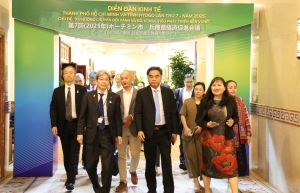
Green and digital transformation for sustainable development was the central theme of the 7th Ho Chi Minh City – Hyogo Economic Forum, held in Ho Chi Minh City on August 5.

HONG KONG SAR – Media OutReach Newswire – 8 August 2025 – Bora Pharmaceuticals (TWSE: 6472) today announced its financial results and operational highlights for second quarter of 2025.

Quarterly Business and Financial Highlights

· Company reported quarterly basic EPS of NT$5.95, with NT$1.81 from discontinued operations. OPEX was ~15% below guidance, aided by a ~4% FX gain. Gross margin was impacted by ~4% due to lower CDMO utilization.
· FX loss totaled at ~NT$252 million in 2Q25, or NT$2.4 per share; Excluding FX impact from operational to non-OP, core EPS would have reached approximately NT$8.08, second highest on record after 1Q23, excluding all M&A related non-operating gains.
· Fueled by expanded capacity and new dosage forms, Bora’s CDMO business in 1H25, including internal orders, grew 69.5% compared to same period last year, reaching more than NT$5.01 billion, and yet posted a 26.6% sequential decline during the quarter due to slower momentum navigating through transitional integration phase mainly at sterile injectable site in Maryland and Zhunan facility with no impact on long-term fundamentals.
· Pharma Sales revenues in 1H25 rose 23.0% YoY based on reported unaudited monthly sales, driven by market share expansion of the vigabatrin franchise across three dosage forms. VIGAFYDE uptake continued its acceleration during the quarter, supporting momentum into 2H25.
· The Group observed robust CDMO order momentum in 3Q25, supported by a more streamlined and disciplined operating structure. With this solid execution base in place, Bora is confident that core profitability will resume. As CDMO growth accelerates through expanded U.S.-based capacity and capabilities in the near future, Bora shall be positioned for the next inflection point.
· Share capital increased 0.25% during the quarter from employee stock option exercises and convertible bond conversions. Company went ex-rights on August 4 with book closure and record date both on August 10.
· The Board approved setting up Bora Global Ltd., a wholly owned BVI subsidiary of Bora, and the injection of US$40mn in eye of fluctuating FX and other geo political nuances to reduce the Company’s USD exposure.
Bobby Sheng, Chairman of Bora Group, stated, “The second quarter marks our transition out of the integration phase that began in 4Q24 with stronger operational cash inflow. To further enhance our resilience to geopolitical and currency fluctuations, we have confirmed the establishment of Bora Global Ltd., a wholly owned BVI subsidiary. The planned injection of US$40 million into this entity reflects a proactive step to reduce the Company’s USD exposure and strengthen financial flexibility amid ongoing macro uncertainties.
Following multiple business and capacity acquisitions last year, we are proud to have established a solid foundation for operational efficiency gains and scalable growth in our change-enabling CDMO business and service-model oriented specialty pharma expansion.
Looking ahead, Bora will advance its focus on high-value and complex dosage forms supported by ample cash on hand to grow our CDMO business. As of 2Q25, around 80% of our 2025 CAPEX plan has been deployed. One of the key investments include a high-performance filling line at our Canada site in Mississauga which enables larger volumes at higher speeds with greater flexibility, particularly for dermatologic products. The investment comes as the global dermatology drugs market is projected to nearly double in value to over $70 billion by 2030, reflecting the rising demand for high-quality, specialized treatments. In addition, while Flex-Pro line at our sterile injectable site in Maryland is expected to enter commercial stage production in 3Q25, while state-of-the-art isolated fill-finish system of automated vial, syringe, and cartridge filling line for the cGMP multi-product production of potent and targeted parenteral pharmaceuticals will take place over the course of 2026.
Last but not least, year-to-date, we’ve added 8 new clients to our CDMO network, mostly for Maple Grove site in Minnesota. Newly added order backlog in 2025 increased to US$138 million. Majority of the contracts, in value, belongs to Canadian site and sterile injectable facility with orders from anchor new clients.
On pharma sales side, specialty pharma business significantly outperformed expectations, with the vigabatrin franchise achieving double digit growth in market share. In the second half of the year, we plan to continue investing in channel marketing and strengthening engagement with key stakeholders on the payer side. The revenue mix between specialty pharma and generics reached 35% vs. 65% during the quarter, marking Bora’s official transition into a specialty pharma company. Moving forward, we will focus on strengthening our presence in Ready-to-Use forms of dosages in the rare and underserved DEE (Developmental and Epileptic Encephalopathies) space through both in-licensing and proprietary R&D, enabling more efficient resource allocation and return in a market where me-too products have been under increasing pressure.
This is part of Bora’s ongoing transformation toward a more white-glove, service-oriented model across both pharma sales and CDMO, sharpening our strategic focus on high-demand, value-driven markets to scale, integrate, and synergize”

2Q2025 Operational Achievements & Full Year Outlook

Global CDMO Operations
Global CDMO Operations (excluding internal orders) revenues arrived at NT$1.59 billion in the second quarter, up 14.8% YoY and representing approximately 32.7% of total revenue. Including internal orders, CDMO revenue reached NT$5.01 billion. A total of 548 million doses were developed and manufactured. Revenue contribution from global top 20 pharmaceutical companies remained steady at approximately 32%. Bora continues to execute on expanding this customer base to enhance business visibility and stability.
· In 1H25, the small molecule and sterile CDMO pipeline added US$138 million in backlog, marking historic high.
· While the Company ramps up its Maple Grove site, it is seeing encouraging momentum – clinical-stage clients are transitioning to long-term strategic partnerships. In parallel, Bora observes a steady uptick in contract signings from pharmaceutical companies looking to secure US domestic manufacturing. Discussions remain active with potential anchor clients and the Company is planning the initiation of small molecule packaging line build-out as the first step in our capacity pre-sell strategy.
· Large molecule CDMO operation was launched following the January 20 reverse-acquisition of Bora Biologics by Tanvex Biopharm where Bora owns 30.5% of Tanvex. CDMO operations at the San Diego site are now active, and the ongoing 2,000L expansion has received strong interest from late-stage clients with half of the potential deals from US clients.
Pharma Sales Operations
Pharma Sales Operations revenue reached NT$3.26 billion, down 10.4% YoY, primarily due to discontinuing several products under significant pricing pressure. Pharma Sales accounted for approximately 67.0% of total revenues.
· Bora identified a shift from DRE (Drug Resistant Epilepsy) to DEE (Developmental and Epileptic Encephalopathies) in the epilepsy market since the acquisition of Upsher-Smith and validated, through field work of sales and marketing, that legacy compounds fall short in addressing the significant unmet needs in this segment. Approved treatments were only available for epilepsies related to Dravet Syndrome, Lennox-Gastaut Syndrome, TSC (Tuberous Sclerosis Complex) and CDKL5 deficiency at the moment, meaning more NCEs will come in the near future, further enlarging the addressable market. The Company expects to capture the sizable opportunities of approximately US$ 10 billion in the next 3 to 5 years building a sound pipeline with Ready-to-Use 505(b)(2) such as Stiripentol, USL551, and at least 2 more compounds.
Bora continues to await regulatory approval for 3 high-value generics in our pipeline in the remainder of the year.

Recent Investor Conference

Bora will host an English online earnings call at 6:00 p.m. Taiwan time on Aug. 8, 2025, followed by an investor conference hosted by Taishin Securities at the Grand Hyatt Taipei at 2:30 p.m. on Aug. 12, 2025. Both events will cover the company’s Q2’25 financial and business results and outlook.