The generics industry: unlocking new growth drivers
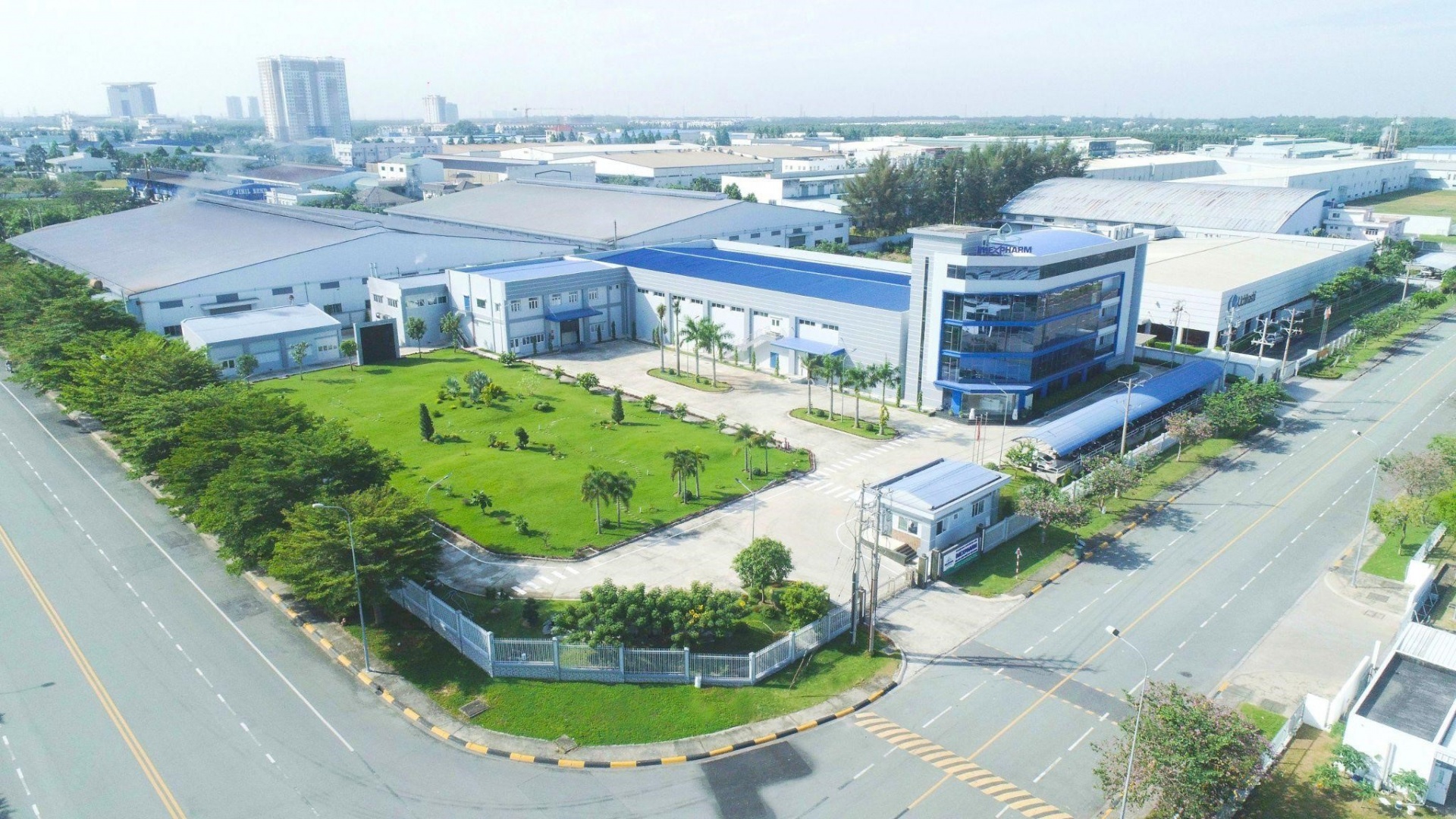
Inside Imexpharm’s EU-GMP–certified pharmaceutical manufacturing plant. Photo: Imexpharm

In the final days of 2025, Vietnam’s pharmaceutical sector marked a significant milestone as Imexpharm Corporation introduced its first “first generic” antibiotic – a next-generation product manufactured in compliance with EU-GMP standards.

First generic drugs are the earliest generic versions of originator medicines, typically entering the market within the initial years following patent expiry. Their introduction expands treatment options for physicians and patients alike, offering substantially lower costs while maintaining stringent standards of efficacy and safety.

This development signals an accelerating shift within Vietnam’s pharmaceutical industry towards a growth model driven by quality, advanced technology along with deeper investment. It reflects a strategic move away from the extensive, volume-based expansion of previous years towards a more sustainable and competitive value-chain upgrade.

EU-GMP: the gold standard
The generics industry: unlocking new growth drivers
IMP4 Factory honoured in Binh Duong province’s Green Book. Photo: Imexpharm

Founded in 1977, Imexpharm quickly established a development strategy anchored in quality-driven decision-making across all aspects of its operations. From becoming the first pharmaceutical company in Vietnam to operate a non–beta-lactam manufacturing facility meeting GMP-ASEAN standards in 1997, Imexpharm has consistently set industry benchmarks.

Since 2014, the company has continuously invested in its factory system to meet EU-GMP standards. By the fourth quarter of 2016, it had become the first pharmaceutical enterprise in Vietnam to operate three EU-GMP–certified production lines simultaneously.

To date, it remains the domestic company with the largest number of EU-GMP–certified production lines, operating 12 lines across three manufacturing complexes – IMP2, IMP3, and IMP4.

Meeting the stringent requirements of EU-GMP allows businesses to master the technology for producing complex drugs and dosage forms such as multi-dose antibiotics, injectable drugs, and lyophilised powders for injection – segments that previously relied heavily on imported supplies. Through these capabilities, the company is reinforcing its role as a domestic manufacturer in the pharmaceutical supply chain.

EU-GMP is among the most rigorous pharmaceutical standards, requiring strict validation processes and regular reassessments by European regulatory authorities to ensure consistent and sustained quality.

Throughout production, raw material selection is governed by strict quality criteria and supplier compliance, in line with WHO-GMP and EU-GMP requirements. Meanwhile, the entire manufacturing process and associated data are continuously and tightly monitored, creating a transparent and robust foundation for product quality assurance.

R&D and international cooperation

The generics industry: unlocking new growth drivers
Research and development activities at Imexpharm’s EU-GMP–certified Pharmaceutical Plant. Photo: Imexpharm

To strengthen its capacity to produce high-tech pharmaceuticals in compliance with EU-GMP standards, Imexpharm has intensified cooperation with leading global pharmaceutical companies such as Sandoz, Sanofi-Aventis, Pharmascience, and Genuone Sciences Inc.

Most recently, the share transfer of Imexpharm between SK Group and Livzon – a pharmaceutical group in finished drugs and pharmaceutical raw materials (APIs), with a diversified portfolio spanning chemical medicines, APIs, and biological products – is expected by experts to create new opportunities for the company to receive technology transfers and gain access to leading pharmaceutical manufacturing standards.

As science as well as technology and data increasingly drives rapid advances in pharmaceutical R&D, Imexpharm’s expanded international cooperation and technology transfer are viewed as a positive long-term prospect, enabling greater access to cutting-edge technologies and diversified product portfolios from global partners. This approach is widely regarded as a sustainable growth model that relatively few domestic pharmaceutical companies possess the resources and capabilities to pursue.

Strategic depth

With a strategy centred on deep investment in EU-GMP–compliant production capacity and international cooperation models, Imexpharm has sustained positive growth over many years. During 2020–2024, the company recorded a compound annual growth rate of 15.3 per cent in total revenue.

By the end of 2025, Imexpharm’s gross revenue reached VND2.91 trillion ($111.94 million), representing a 16 per cent on-year increase and exceeding the domestic pharmaceutical industry’s average growth rate of 9 per cent (based on industry data as of the end of third quarter in 2025). Net revenue totalled $93.86 million, up to 10.7 per cent, with balanced contributions from both OTC and ETC channels.

The ETC channel posted growth of 11.8 per cent, reflecting rising demand for EU-GMP–certified products and a shift towards higher-value pharmaceuticals. Meanwhile, the OTC channel recorded an 18.3 per cent increase amid the gradual recovery of the pharmaceutical retail market. Revenue from modern pharmacy chains rose sharply, contributing to broader market coverage and reinforcing the company’s brand positioning.

Gross profit margin in 2025 is expected to improve to 41 per cent, supported by effective cost control, optimised production planning, and enhanced operational efficiency across manufacturing facilities.

“As a pioneer in the industry, we are committed to building a solid growth foundation based on rigorous quality standards, responsible innovation, and the delivery of long-term value to all stakeholder,” said Tran Thi Dao, general director of Imexpharm.

Beyond the domestic market, Imexpharm continues to expand internationally, holding 28 marketing authorisations in Europe for 11 products and steadily increasing its presence to more than 40 countries and territories worldwide.

Imexpharm sees strong first half growth with $47 million in revenue Imexpharm sees strong first half growth with $47 million in revenue

Imexpharm reported strong first half results on July 18, with net revenue up 22 per cent on-year, reaching nearly half of its annual target.

Imexpharm’s EBITDA margin rises to 22.3 per cent driven by cost management and growth Imexpharm’s EBITDA margin rises to 22.3 per cent driven by cost management and growth

In September 2025, Imexpharm’s profit before tax surged by 101 per cent, while EBITDA increased by 48 per cent.

Imexpharm named Vietnam’s best place to work in pharmaceutical industry Imexpharm named Vietnam’s best place to work in pharmaceutical industry

Imexpharm has been named the #1 Best Place to Work in Vietnam 2025 in the pharmaceutical, medical devices, and healthcare sector category.

How prepared is Vietnam for digital economy development, and what progress has been made so far?

Digital economy takes centre stage in Vietnam’s new growth model
Le Trung Hieu

In 2020, the Prime Minister approved a national digital transformation scheme under Decision No.749/QD-TTg. Its objectives are to develop digital government, the digital economy, and digital society, while fostering Vietnamese digital technology enterprises capable of competing and expanding into global markets.

The initiative prioritises the development of digital technology enterprises, shifting the IT sector away from assembly and outsourcing towards mastery of digital products and Industry 4.0 technologies. It also promotes digital content, creative industries, the sharing economy, e-commerce and smart manufacturing, while accelerating digital transformation within enterprises to strengthen competitiveness at both firm and economy-wide levels.

Given the increasingly important role of the digital economy in the local economy, the 2021 revised Law on Statistics introduced the indicator “share of digital economy value added in GDP” into the National Statistical Indicator System.

The content and publication cycle of this indicator are specified in Decree No.94/2022/ND-CP. Since 2023, the General Statistics Office, now the National Statistics Office, has compiled and published this indicator in accordance with regulations and will continue to do so in the forthcoming period.

What results have been achieved in the five years since implementing Decision No.749?

Compilation results for 2025 show that the digital economy continues to affirm its role as one of the key growth drivers of Vietnam’s economy, closely linked to the national digital transformation process.

The share of digital economy added value in GDP in 2025 is estimated at 14.02 per cent, equivalent to more than $72 billion, up 1.64 times compared to 2020.

The digital economy has expanded in both breadth and depth. Core digital economy sectors account for over 60 per cent of total digital economy value, while the level of digitalisation across industries and sectors has continued to expand, particularly in trade, finance, public administrative services and energy infrastructure.

On average during the 2021-2025 period, the share of digital economy added value in GDP reached approximately 13.2 per cent, with core digital economy sectors contributing 8.13 per cent and the digitalisation of other sectors contributing 5.05 per cent.

These results reflect the initial effectiveness of the National Digital Transformation Strategy, the leading role of digital government, as well as the concerted efforts of all levels, sectors, the business community and citizens in developing the digital economy and digital society.

The core digital economy is seen as the backbone of the wider digital economy. How is this sector developing in Vietnam?

The core digital economy includes sectors such as the manufacturing of electronic products, computers and optical products; software publishing; telecommunications; computer programming; IT consultancy and related activities; data processing, hosting and portal activities.

According to statistics, in 2025, core digital economy sectors contributed approximately 8.4 per cent of GDP, equivalent to $43.3 billion, accounting for more than 60 per cent of total digital economy value.

Digitalised sectors – those using core digital economy products as production and business inputs – accounted for around 5.6 per cent of GDP, equivalent to $28.8 billion.

Some digitalised sectors with high digital economy added value include wholesale and retail trade applying digital technologies (e-commerce), accounting for about 12 per cent of total digital economy added value.

Service sectors applying IT in production, business and management have shown rapid growth, contributing to an increase in the share of digital economy from the services sector in the GDP from 6.5 per cent in 2020 to a little over 7 per cent in 2025.

This demonstrates the clear efforts of the government, ministries, sectors and localities in encouraging IT development and accelerating the digitalisation of economic sectors.

At the local level, how is the digital economy shaping regional growth dynamics in Vietnam?

In 2025, the digital economy became a significant factor, creating marked differences in growth among localities.

Among 34 provinces and centrally governed cities, four recorded a digital economy value-added share in regional GDP exceeding 20 per cent, including Bac Ninh at around 46 per cent, Thai Nguyen at almost 30 per cent, Haiphong at over 22 per cent and Phu Tho at close to 23 per cent.

The country’s two economic growth poles, Hanoi and Ho Chi Minh City, also reported digital economy shares of over 17 per cent and 13 per cent of GDP, respectively.

Localities with a high digital economy share are typically major destinations for foreign direct investment in high-tech industrial manufacturing, resulting in a large proportion of core digital economy sectors in regional GDP.

The disparity in the digital economy’s contribution to regional GDP reflects differences in industrial development levels, digital infrastructure, investment attraction capacity, and the extent of digital technology application in socioeconomic development across localities.

Resolution No.57-NQ/TW targets the digital economy contributing at least 30 per cent of GDP by 2030. In your view, is this target achievable?

During the 2021-2025 period, the digital economy emerged as a key pillar of the National Digital Transformation Strategy. E-commerce, digital payments, online services, smart logistics and data-driven business models all recorded strong growth.

In particular, the development of digital government – through electronic identification, national population databases and online public services – has created an important foundation for reducing transaction costs, enhancing transparency and strengthening digital trust.

These factors have directly contributed to the expansion of the digital economy’s scale, demonstrating the mutually reinforcing relationship between digital transformation and economic growth.

The digital economy serves as a central driving force for rapid and sustainable growth by improving labour productivity, renewing growth models, expanding market space, and enhancing service quality and living standards for the population.

The results achieved in 2025 demonstrate the strong commitment and high determination of the government, ministries, sectors, localities, the business community and citizens in developing the digital economy and digital society, in line with the spirit of Resolution 57.

New policy momentum powers Vietnam’s digital economy New policy momentum powers Vietnam’s digital economy

Vietnam’s digital transformation is entering a decisive new phase, as AI, 5G, and bold institutional reforms converge to propel the country towards one of the fastest-growing digital economies in the region, driven by strong government commitment and rising confidence from leading local tech enterprises.

5G and AI to shape next phase of digital economy 5G and AI to shape next phase of digital economy

The convergence of 5G and AI is expected to shape the future of industries and the next phase of digital economy growth in Vietnam.

Main drivers for Vietnam’s digital economy future Main drivers for Vietnam’s digital economy future

As businesses look to Vietnam for innovation and investment opportunities, understanding the forces shaping this evolving landscape has become crucial. Yves Vanderstraeten, vice chairman of the European Chamber of Commerce in Vietnam’s Digital Sector Committee, discussed with VIR’s Minh Anh the motivations propelling the digital economy.

At the customs-business dialogue meeting held by the Ministry of Finance in December, Ho Sy Hung, chairman of the Vietnam Chamber of Commerce and Industry (VCCI), noted that amid ongoing volatility both domestically and globally, the effective implementation of tax and customs policies is viewed by the business community as a critical factor in strengthening confidence, supporting recovery, and facilitating business activities.

Customs reforms strengthen business confidence, support trade growth
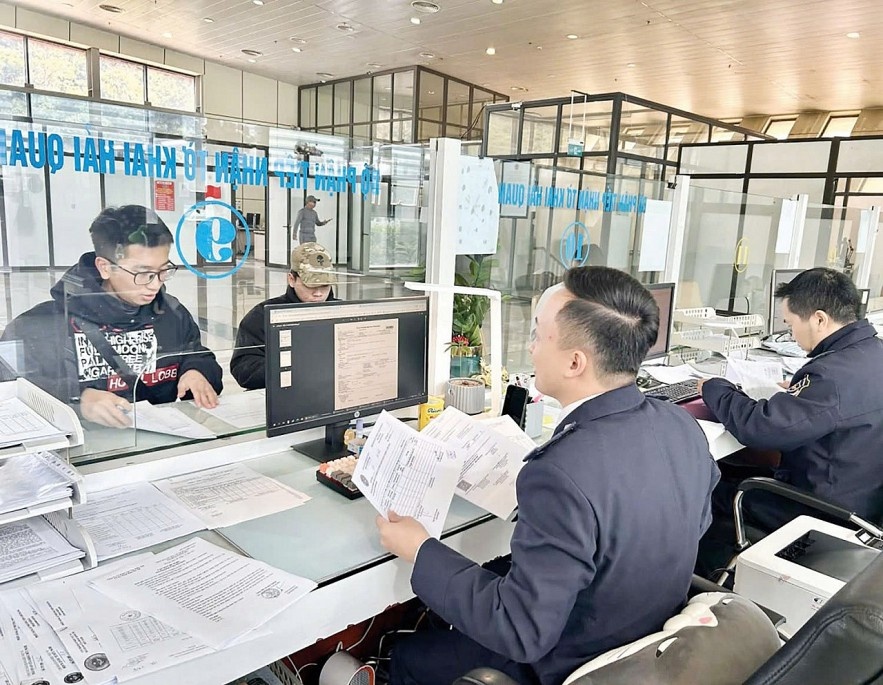
Customs officials help businesses complete export procedures. Photo: Hai Anh

“Businesses highly appreciate the fact that customs authorities regularly organise dialogues, training sessions, and direct consultations, helping policies quickly translate into practice and minimize compliance risks,” the VCCI leader stated.

Administrative procedure reform and digital transformation continue to serve as central pillars of customs management. In the customs sector specifically, a myriad of concrete results have been recorded, including significant reductions in business conditions, shorter processing times, and lower compliance costs for enterprises.

Notably, administrative procedures have now been fully integrated into the National Single Window Portal and the National Public Service Portal.

The Ministry of Finance, including the customs sector, has issued and implemented numerous timely and practical support policies, contributing to stronger confidence and economic recovery and growth, particularly through policy dialogue, which has proven to be an effective channel for accompanying business development.

Based on feedback gathered from enterprises and industry associations, recent customs reforms have demonstrated positive progress, especially in the application of new regulations that are better aligned with practical realities, and ensuring the simplification of procedures, and the acceleration of IT adoption.

Automated clearance systems, online public services, and digitalisation solutions have helped businesses shorten customs clearance times, reduce logistics costs, and enhance predictability in import-export operations.

Addressing expectations for deeper customs procedure reform, Hung noted that in the context of deeper international integration, customs reform needs to be further advanced in a more substantive, synchronised, and consistent manner. Firms hope that procedures will continue to be simplified, particularly in specialised inspection stages.

“With the customs sector’s strong reform commitment and constructive spirit, VCCI expects the customs sector to remain a reliable partner for businesses, contributing to the promotion of import-export activities, investment attraction, and the creation of sustainable growth momentum in 2026 and beyond,” he stressed.

Regarding the development and refinement of customs policies and legislation, Nguyen Thanh Hung, deputy director general of the General Department of Vietnam Customs, said in an interview with the media before the customs-business meeting that a series of important resolutions issued by the Politburo, such as those on the development of sci-tech, innovation and national digital transformation; on international integration in the new context; or on private sector development- have provided a solid political foundation for institutional reform in the customs sector.

“All new regulations are geared towards simplifying administrative procedures, encouraging the digitalisation of dossiers, and facilitating import–export activities, while still ensuring state management requirements and combating smuggling and trade fraud. Improving the legal framework is a crucial prerequisite for completely renewing operational processes and gradually building digital and smart customs in line with international standards and practices,” Hung noted.

A notable highlight in recent customs policy and legal development has been the strengthening of consultations and dialogue with the business community.

Customs authorities have implemented various consultation formats, including public consultations on official portals, coordination with the VCCI, domestic and foreign business associations, and targeted groups of enterprises directly affected by specific policies.

In 2026, in addition to routine tasks, the customs sector is conducting a comprehensive review of the Customs Law in connection with the requirements of building digital customs.

On that basis, amendments and supplements to several provisions of the Customs Law are expected to be proposed for submission to the Ministry of Finance for reporting to the government.

“The revision of the Customs Law aims to create a solid legal basis for the comprehensive digital transformation of customs management, internalise international treaties, strengthen decentralisation and delegation of authority, and further improve the legal system towards reform, procedural simplification, openness, and transparency, while ensuring consistency and coherence with related laws and international agreements to which Vietnam is a signatory,” Hung said.

Customs reform to prioritize high-tech and innovative businesses Customs reform to prioritize high-tech and innovative businesses

Au Anh Tuan, deputy director general of the Department of Vietnam Customs, outlines key changes to the Customs Law aimed at simplifying procedures and offering more incentives for high-tech, innovative, and semiconductor businesses, and helping to support supply chains and boost the startup ecosystem.

MoF pledges fair, transparent tax policies for Korean investors MoF pledges fair, transparent tax policies for Korean investors

The Ministry of Finance has held a dialogue with South Korean businesses, addressing tax and customs issues and pledging stronger support for investors.

Strengthening supply chains through trade promotions and customs reform Strengthening supply chains through trade promotions and customs reform

The Vietnam Trade Promotion Agency (VIETRADE) is focusing on building safe and sustainable supply chains for enterprises in the new geopolitical context.

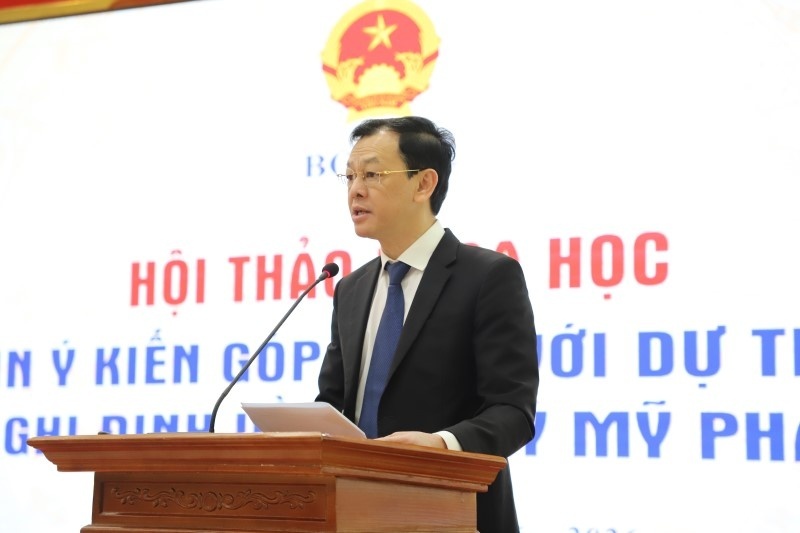
At a conference held on January 22, the Ministry of Health (MoH) gathered feedback on a draft decree regulating cosmetics management, as part of efforts to modernise oversight and align it with current market realities.

Speaking at the event, Deputy Minister of Health Nguyen Tri Thuc underscored that cosmetics are essential consumer products which, beyond enhancing appearance, directly affect public health, consumer rights, and quality of life.

Cosmetics rules set for overhaul under draft decree
Photo: MoH

“Current practices pose many challenges to state management of cosmetics, as well as to the compliance with legal regulations by organisations and individuals producing and trading cosmetics,” he said.

Circular No.06/2011/TT-BYT on cosmetic management, issued 14 years ago, is considered outdated. As a result, on December 4, the MoH submitted a draft decree on cosmetic management to the government, incorporating feedback from multiple agencies and organisations on regulatory scope, product notifications, post-inspection, business conditions, and the balance between state oversight and a favourable business environment.

The draft aims to ensure consumer safety, promote voluntary compliance among businesses, and reduce the regulatory burden on management agencies.

Cosmetics rules set for overhaul under draft decree
Deputy Minister of Health Nguyen Tri Thuc. Photo: MoH

“The improvement of institutional frameworks and legal regulations prioritises protecting the health of the people,” said Thuc.

At the conference, experts and representatives from ministries, agencies, local health departments, and business associations shared scientific evidence and practical experience to inform the draft decree. Key discussions covered global and domestic cosmetic management practices, the draft’s constitutionality and feasibility, product declarations, and the certification of cosmetic manufacturing facilities in line with Good Manufacturing Practice standards.

They also exchanged views on potential issues that could arise if the draft decree on cosmetic management is approved, and proposed measures to address them.

The deputy minister called for further refinement of the draft towards a more modern and transparent framework, with a clear shift from pre-inspection to post-inspection and stronger accountability. He also stressed the need to align with international commitments, particularly the ASEAN Harmonisation Agreement on Cosmetic Management, and to reflect industry practices and development needs in the new phase.

The conference provides an important basis for the Ministry of Health to continue a thorough review of the draft, ensuring it is consistent, coherent, feasible, and aligned with the prime minister’s direction on administrative procedure reform.

French cosmetics retailer Sephora enters Vietnam French cosmetics retailer Sephora enters Vietnam

World-renowned cosmetics retailer Sephora has officially entered the Vietnamese market via an e-commerce channel, rather than through a traditional brick-and-mortar store.

Rohto-Mentholatum Vietnam takes over Naris Cosmetics Rohto-Mentholatum Vietnam takes over Naris Cosmetics

Rohto-Mentholatum Vietnam has completed the purchase and sale agreement and change of ownership of Naris Cosmetics Vietnam.

Korean cosmetics capturing hearts Korean cosmetics capturing hearts

Vietnam’s cosmetics segment is thriving as South Korean brands leverage the rising influence of its culture to meet the growing demand for high-quality beauty products.

DAV rolls out new plan to combat counterfeit drugs and cosmetics DAV rolls out new plan to combat counterfeit drugs and cosmetics

The Ministry of Health has ordered the recall of multiple cosmetics products after recent quality control failures, reaffirming its commitment to safeguarding public health.