The central provice has so far established 22 industrial clusters.

The People’s Committee of Ha Tinh province in the central region has decided to establish Lam Hop industrial cluster in Ky Lac commune with a total area of over 30 hectares.

Nhon Tan Warehouse Development and Investment Ltd.Co has been selected as the investor of the project.

The project has total investment capital of VND284 billion ($10.7 million). Of which, the investor will contribute VND57 billion (over $2.18 million). The remaining capital will be mobilized from different legal sources.

The project’s operating term is 50 years, starting from the date the investor is granted lease land by the State.

Construction of the project is scheduled for completion after 39 months, starting from the date when the investment policy is approved.  

Ha Tinh has so far established 22 industrial clusters with a total area of 580 hectares. Of the total, 19 industrial clusters were put into operation.


The authorities advise businesses and individuals to conduct thorough research before selecting reputable and legally qualified environmental service providers, in order to ensure full compliance with environmental laws and regulations.

The Police Investigation Agency of Dak Lak Provincial Police on July 23 announced it has expanded its criminal investigation into the crime of “giving and receiving bribes”.

Simultaneously, it has pressed charges against three individuals: Le Trong Huy Truong, Head of the General Administration Department at Dak Nong Aluminum Company-TKV (VINACOMIN); Mai Thanh Tung, Deputy Head of the Environmental Safety Department at Dak Nong Aluminum Company-TKV (VINACOMIN); and Le Manh Hung, former Deputy Director of the Medical Center of the former district of Lak (former Dak Lak province).

These accused individuals had an agreement with the accused, namely Doan Ba Nhut, Director of the PNE Environment Center (located in Thanh Nhat ward, Dak Lak province), who was previously charged and arrested by the Agency in December 2024. 

The agreement was to facilitate the PNE Environment Center in securing contracts with their respective organizations. In return, for each contract that was signed, executed, and fully paid for, Nhut was required to kick back 30% to 35% of the contract’s value to Truong, Tung, and Hung.

This expansion of the bribery investigation is related to a case of “forgery and use of forged documents of an agency or organization,” for which the Agency initiated a criminal case and pressed charges in December 2024.

The investigation determined that from October 2019 to 2024, the PNE Environment Center’s Certificate of Eligibility for Environmental Monitoring Services had expired. Furthermore, the center lacked the required capacity in terms of personnel and laboratory facilities.

Despite this, Nhut proceeded to sign environmental service contracts with nearly 100 organizations and individuals across several provinces and cities, including Dak Lak, Gia Lai, Lam Dong, and Ho Chi Minh City. He directed Tran Le Lam Phương and other employees of the PNE Environment Center to forge 1,058 environmental monitoring analysis and testing result forms, thereby illegally profiting billions of VND (Vietnamese currency).

The fraudulent environmental impact assessment reports did not accurately reflect the actual environmental conditions, undermining the effectiveness of environmental protection policies and causing long-term damage to the ecosystem.

The defendants’ criminal actions have infringed upon the State’s environmental management. These acts not only harm the environment but also erode public trust in organizations operating in the environmental sector.

Whilst investigation is expanding to clarify the violations of other individuals involved, the authorities advise businesses and individuals to conduct thorough research before selecting reputable and legally qualified environmental service providers, in order to ensure full compliance with environmental laws and regulations.

The central province sets a yearly target of $8 billion in export value.

Thanh Hoa province in Central Vietnam posted export revenue of $4.1 billion in the first seven months of the year, marking a year-on-year increase of 21.8%, according to the provincial People’s Committee.

In July alone, its export value reached $667 million, surging 21.7% compared to the same period last year.

There are currently over 230 enterprises in the central province involving directly in export activities,with a wide range of products, including farm produce, seafood, garments, construction materials, and electronic components.

The provincial authorities set a yearly target of $8 billion in export revenue.

Regarding imports, the province registered import turnover of over $5.6 billion in the seven-month period, equal to 89.6% of last year’s figure.


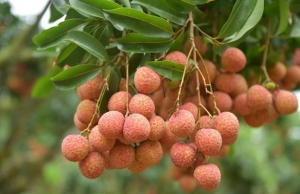
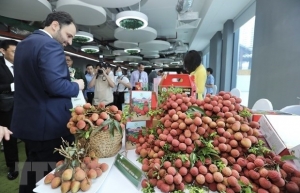
In July 2025, the fruit became available at 635 Costco stores across the US and Canada, alongside other major retail outlets such as Safeway.

Vietnamese lychees debut at leading US retail giant Costco
Photo: Ministry of Industry and Trade

According to the Vietnam Trade Office in San Francisco, US-based Dragonberry Produce, a top-tier importer of premium agricultural products, is spearheading the distribution of Bac Ninh lychees under the “Golden Lychees” brand as part of its third consecutive annual campaign to bring Vietnamese lychees to North America.

The fruit, grown according to Global G.A.P. standards, is praised for its vibrant red-pink hue, crisp texture, and delicately sweet flavour. It also meets stringent US phytosanitary regulations. After undergoing irradiation treatment in Vietnam, the lychees are shipped by sea to the US, ensuring freshness and quality upon arrival.

The presence of Vietnamese lychees in prestigious retail chains like Costco and Safeway reflects commercial success and demonstrates the rising global appeal of Vietnam’s premium agricultural offerings.

Dragonberry representatives noted that American consumers have shown growing appreciation for the distinctive flavour of Vietnamese lychees. The company emphasised its commitment to maintaining quality and building a sustainable brand in the international market.

Beyond trade, Dragonberry is collaborating directly with local cooperatives and enterprises in Vietnam to standardise cultivation, post-harvest handling, and packaging processes. These efforts are also laying the groundwork for expanding into other fruit categories, including longan, dragon fruit, and passion fruit, aiming to increase export volumes and promote sustainable development.

Vietnamese agricultural goods make Chinese e-commerce debut Vietnamese agricultural goods make Chinese e-commerce debut
Retail chains craft lofty goals for Vietnamese market Retail chains craft lofty goals for Vietnamese market
Vietnamese lychees confident of winning over consumer taste in Netherlands Vietnamese lychees confident of winning over consumer taste in Netherlands
Vietnamese lychees aim to go global Vietnamese lychees aim to go global
Vietnam lychees penetrate Thai market Vietnam lychees penetrate Thai market

Dragonberry Produce, a leading U.S. importer of premium fruits, has launched its 2025 campaign to distribute lychees grown in the northern province of Bac Ninh through major supermarket chains, including Safeway and, for the first time, Costco.

Vietnamese fresh lychees are, available at Costco, the largest retail chain in the U.S. with 635 stores across the U.S. and Canada, according to a report from the Viet Nam Trade Office in San Francisco, as quoted by the Government News on July 21.

Dragonberry Produce, a leading U.S. importer of premium fruits, has launched its 2025 campaign to distribute lychees grown in the former province of Bac Giang (now Bac Ninh) in Vietnam’s northern region through major supermarket chains, including Safeway and, for the first time, Costco.

This marks the third consecutive year Vietnamese lychees have entered the U.S. market, reflecting their steady growth and strong international appeal.

Marketed under the brand Golden Lychees, the fruit meets Global G.A.P. standards, ensuring its vibrant red-pink skin, sweet taste, crisp texture, and compliance with stringent U.S. phytosanitary regulations. The lychees undergo irradiation treatment in Vietnam before being shipped by sea to the U.S., preserving freshness and quality upon arrival.

Dragonberry representatives said that the entry of Vietnamese lychees into top retail chains like Safeway and Costco is a significant commercial milestone and a testament to the rising demand for high-quality Vietnamese agricultural products in the U.S. market. American consumers are increasingly drawn to the unique flavor of Vietnamese lychees, and the company remains committed to quality and sustainable branding.

The presence of Vietnamese lychees in major U.S. retailers not only strengthens the fruit’s export value but also boost Vietnam’s position in the global agricultural market. It showcases the effective collaboration between producers, exporters, and trade authorities.

The Government News further reported that Vietnam is now the second‑largest global lychee producer, with an estimated harvest of 303,000 tons in 2025, up nearly 30 per cent compared to 2024.

Vietnamese lychees are currently exported to over 30 countries, including China, the U.S., Japan, EU, Australia, Canada, Thailand, the UAE, and Singapore.

In 2025, first batches of Thanh Ha variety supported exports to Japan and Australia, with expansion plans into Canada, the EU, and Middle East markets.

The implementation of electronic invoices from cash registers is a step in the process of modernizing tax administration.

The number of businesses registering to issue e-invoice generated from cash registers reached 146,032 in the first six months of 2025, a five-fold increase compared to the same period last year, according to the  Department of Taxation of the Ministry of Finance.

As of July 15, the figure rose to 252,635, a 2.4-fold growth in comparison with the end of 2024.

The Department targets to have 100% of businesses that involve in direct sale activities such as food and beverage, restaurants, hotels, supermarkets, and retail, to register to issue such e-invoices.  

The implementation of electronic invoices from cash registers is a step in the process of modernizing tax administration, replacing the lump-sum tax method, and increasing transparency in business activities.


According to FPT Digital, AI and generative AI are creating positive impacts across the global pharmaceutical industry. GenAI is expected to contribute between $60 billion and $110 billion annually from 2024 to 2029. All stages of the pharmaceutical value chain are benefiting from the application of GenAI.

Hoang Viet Anh, chairman of FPT Digital, explained that AI supports the development of new drugs by significantly reducing both time and costs. A notable example is Insilico Medicine, which, with AI support, discovered a new drug in under 18 months, at just 10 per cent of the usual cost.

“In clinical trials, AI can shorten the trial period by up to 12 months and cut costs by 50 per cent compared to conventional methods,” Anh said.

To realise these substantial benefits, the global pharmaceutical industry is expected to invest heavily in AI towards 2030, with projected annual growth of 42.68 per cent. By 2029, total investment in AI by pharmaceutical companies is forecast to reach $18 billion, with the Asia–Pacific region emerging as the fastest-growing market.

“The application of AI in the pharmaceutical industry has been, and will continue to be, a strong development trend,” said Anh. “Vietnam cannot remain outside that trend. This is a golden opportunity for Vietnam’s pharmaceutical sector to embrace digital transformation and apply AI to boost operational efficiency.”

Anh noted that Vietnam currently has a highly open legal framework, including heavily promoted new rules on providing strong impetus for digital transformation and the application of new technology and innovation across all sectors, including pharmaceuticals.

In parallel, the role of the private economy is being enhanced, enabling pharmaceutical firms, hospitals, doctors, and pharmacists to collaborate based on shared data systems.

However, experts have pointed out that Vietnam’s healthcare sector still faces considerable challenges in applying AI and innovation to improve healthcare accessibility. The pharmaceutical data infrastructure remains fragmented, lacking a centralised, standardised, and digitalised system – a major roadblock to development.

“The industry continues to face difficulties in tracing drug origins and preventing the circulation of counterfeit or substandard medicines,” admitted Anh from FPT Digital. “Clinical trials for new drugs also remain lengthy.”

Experts suggested that Vietnam could learn from international models to enhance innovation and digital transformation in the sector. Hwee Ching Ang, deputy CEO of the Experimental Drug Development Centre in Singapore, said rising healthcare demand in the Asia–Pacific region is driving greater interest and investment in innovation. With rapid growth and escalating demand, the region is becoming a new frontier for the life sciences sector.

“In response, the Singaporean government has long prioritised biomedical innovation to boost research output and attract talent,” he said. “Singapore has steadily invested in research and development for more than two decades, enhancing the financial environment through both domestic and international capital inflows into the biotech ecosystem.”

He added that Singapore is strengthening translational and clinical research capabilities and attracting multinational companies to establish regional headquarters and research centres.

As a result, more than 41 per cent of the world’s leading biopharmaceutical companies now have their regional headquarters in Singapore, making it the most innovative nation in Asia–Pacific. The country’s ecosystem comprises a diverse mix of multinational corporations, startups, government agencies, venture capital investors, and incubators.

Dr. Chang Liu, CEO and founder of ASK Health Asia, said that building a multi-layered health financing system can help improve access.

“There is a growing trend in Asia–Pacific towards multi-source healthcare financing to ensure better access to high-value treatments,” Liu said. “Evidence shows that traditional public funding mechanisms may be limited in scope and availability, creating delays or gaps in patient access.”

For example, Singapore has evolved from a savings-based model to a multi-source system, developing government-backed commercial health insurance schemes that now cover more than 70 per cent of the population.

Mainland China is working to build a multi-layered insurance framework with basic medical insurance at its core, supplemented by commercial insurance. It has also promoted public–private partnership models, now covering more than 12 per cent of the population.

In Taiwan, authorised agencies are exploring diversified financing mechanisms for high-value treatments not covered by national health insurance, including a dedicated cancer drug fund to ease patients’ financial burdens.

Japan, meanwhile, is advancing initiatives to strengthen its drug discovery capabilities through the Council of the Concept for Early Prevalence of Novel Drugs to Patients. These efforts aim to eliminate both drug lag and drug loss.

Specifically, Japan is establishing frameworks for first-in-human clinical trials, enhancing the role of core clinical research hospitals in drug development, promoting multi-regional clinical trials, supporting the development and career progression of clinical trial professionals, and encouraging overseas companies to conduct trials in Japan.

Takaaki Enoki, deputy director of the National Healthcare Policy Secretariat under the Japanese government, said, “To maintain Japan’s global leadership in drug discovery, we are building an ecosystem that supports academia and startups from early research to clinical application, with consistent policy and financial backing. This is also vital for ensuring national security.”

By reforming the structure of the pharmaceutical industry and improving the investment environment, Japan aims to create a sustainable system that enables continual, cyclical development of innovation and capital.

“At the same time, we will promote balanced policies over the medium and long term, considering the integration of general treatment and self-care models,” Enoki added.

Vietnam currently has nearly 95 per cent of its population covered by health insurance. However, despite achievements in healthcare financing, the country still faces a high level of out-of-pocket spending, which now exceeds 40 per cent of total healthcare expenditure – indicating that many individuals are still paying significantly for medical services beyond insurance coverage.

Pharma sector faces up to AI hurdles

Le Thanh Long, deputy Prime Minister

Vietnam’s healthcare system is currently deeply affected by digital transformation and innovation. Science and technology are changing approaches to medical examination and treatment, disease prevention, scientific research, training, medical management, and people’s health management.

In recent times, digital transformation in healthcare has made significant progress. All medical facilities have deployed hospital information systems. Many have deployed e-health records, remote exam and treatment, electronic prescriptions, AI treatment support, and the use of robots.

However, digital transformation in healthcare still faces many issues which raise urgent requirements for innovation in leadership, direction, and strong implementation in public healthcare in the new era as directed by the general secretary.

With that spirit, the Politburo has recently issued important pillars in the form of various resolutions for national development. These resolutions, together with the Politburo’s resolutions in the health sector that are about to be issued, will create strong momentum and breakthroughs in healthcare.

David Duong, global primary healthcare director Harvard Medical School

Vietnam has made strides in policy. The country expands health insurance coverage to 93 per cent of the population, including a wide range of primary healthcare services, expanding primary healthcare services through a pilot family medicine model, and upgrading commune health stations to manage non-communicable diseases and provide patient-centred care. It also carried out training and retraining of health workers and investment in digital health, as well as issuing clinical guidelines for chronic diseases that emphasise hierarchy.

The country needs continued investment in policy implementation. Policy implementation needs support because of outdated healthcare staffing model. Many doctors at commune health stations are unqualified or inexperienced in chronic disease care. In particular, task sharing, competency-based training, and incentives are needed to retain healthcare workers in rural areas.

Supervision, support, and experience are insufficient to improve quality and implement clinical standards.

Local policies have not kept up with the times. National policies call for decentralisation, but this must be accompanied by changes and updates to local-level processes and procedures (for example diagnostic systems and sample transport systems). It should also overcome the loss of trust in the primary healthcare system. Patients often bypass primary healthcare to go directly to higher-level hospitals due to lack of trust in the services of commune health stations.

The selling price of some projects hitting VND91 million ($3,460) per square meter.

The primary selling price for apartments in Hanoi reached VND91 million ($3,460) per square meter, excluding VAT and maintenance costs.

Savills Hanoi even recorded some new high-end projects in the capital city with the primary selling price exceeding VND100 million ($3,892) per square meter in the third quarter of the year.

Ms. Do Thu Hang, Senior Director, Advisory Services of Savills Hanoi, said the apartment market in Hanoi has witnessed an upward trend in selling price, focusing on primary apartments offered directly by investors.

However, from 2026, the price is forecast to decline due to strong increase of supply.

Ms. Trang Bui, Director General of Cushman & Wakefield, said the price hike for  apartments in Hanoi in the second quarter of 2025 was mainly driven by the increase of high-end and premium properties, which accounted for nearly 46% of the new supply in the quarter.


Total investment capital of these projects estimated at over VND50 trillion ($1.9 billion).

Construction of some key projects is scheduled to kick off in southern Dong Nai province on the occasion of the upcoming National Day (September 2), according to the provincial People’s Committee.

They include the Sub-project No.1 of the North-South Expressway (the Gia Nghia – Chon Thanh section), the expanded Tri An Hydropower plant, the expanded Ho Chi Minh City – Long Thanh expressway, and Dau Giay – Tan Phu expressway.

Other projects include construction of an apartment to be built as part of the Thang Long Home – Hiep Phuoc residential area, a social housing project, and Ma Da bridge.

Meanwhile, an inauguration ceremony will be held for the Tan Van – Nhon Trach section of the Ring Road No.3 of Ho Chi Minh City, which runs across Dong Nai province.

Total investment capital of all these projects is estimated at over VND50 trillion ($1.9 billion).


The two airports had been required to suspend all flight operations from 11:00 pm on July 21 to 12:00 pm on July 22, 2025, due to Typhoon Wipha.

Van Don and Cat Bi international airports in Quang Ninh province and Hai Phong city, respectively, reopened for flights starting from 12 pm on July 22, the Vietnam News Agency quoted Mr. Uong Viet Dung, Director of the Civil Aviation Authority of Vietnam (CAAV), as reporting.

The airports have now met the conditions required to resume aircraft operations, Mr. Dung said,  however noting that the CAAV continues to ask the airports to strictly comply with regulations on aircraft operations under adverse weather conditions to ensure absolute safety.

The two airports had been required to suspend all flight operations from 11:00 pm on July 21 to 12:00 pm on July 22, 2025.

Meanwhile, Noi Bai International Airport in Hanoi and Tho Xuan airport in Thanh Hoa province have been instructed to continue monitoring weather forecasts and propose appropriate adjustments to their flight operation plans.

Due to the impact of Typhoon Wipha, the third storm hitting Vietnam this year, Van Don airport canceled three flights, while Cat Bi airport canceled 33 flights, on July 21.