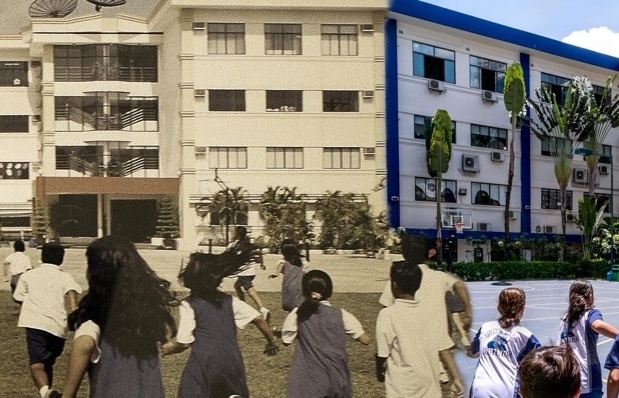
Celebrating the growth and global readiness of ISHCMC's Class of 2025

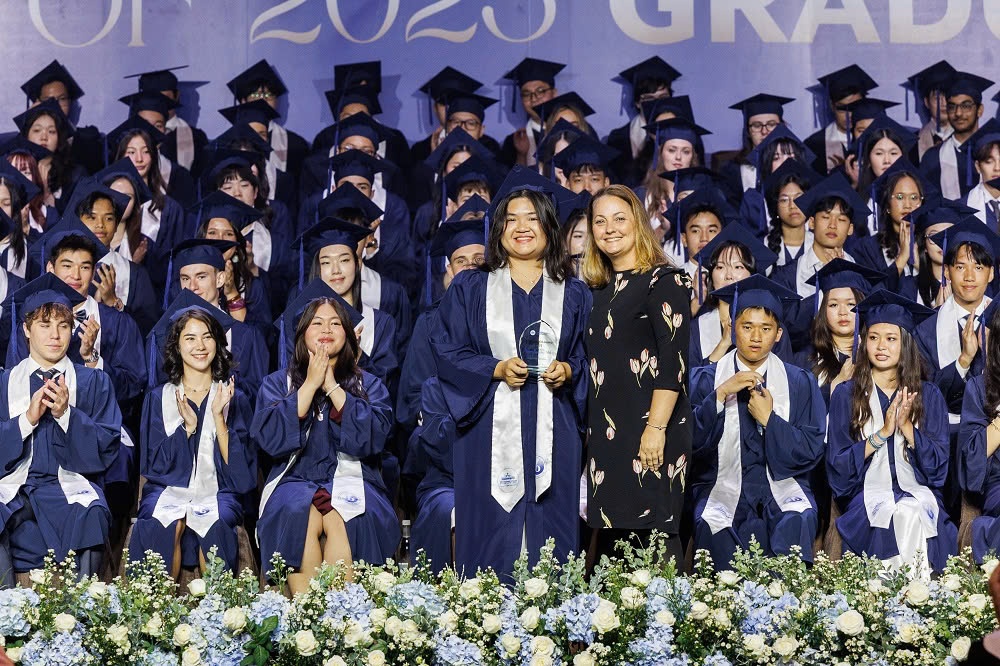
With a graduating cohort of 109 students, ISHCMC achieved an impressive 98 per cent diploma pass rate, far exceeding the global average of 81 per cent.

This accomplishment underscores the school’s dynamic learning culture and dedication to supporting students on their individual educational journeys.

The Class of 2025 achieved an average score of 34 points, outperforming the global mean of 30.58. Nearly half the cohort, 44 per cent, attained scores of 35 points or higher, demonstrating a breadth of strong performance across the board.

Remarkably, six students achieved the prestigious 40+ points milestone, a reflection of their perseverance and the expert guidance of ISHCMC’s educators.

In addition to academic success, ISHCMC celebrates its robust culture of multilingualism and international-mindedness.

This year, 53 per cent of graduates earned the IB Bilingual Diploma, more than double the global average of 23 per cent. This achievement highlights the school’s dedication to fostering cultural fluency and preparing students to engage with a diverse, interconnected world.

“These results reflect more than numbers,” said Marco Longmore, head of school. “They represent countless stories of determination, creativity, and growth. Our students are developing the curiosity and resilience that will carry them into their future endeavours.”

Many graduates began their educational journey at ISHCMC as young learners in the Early Years Programme, progressing seamlessly through the IB continuum from the Primary Years Programme to the Middle Years Programme, and finally into the IB Diploma Programme (IBDP).

This pathway has allowed students to grow in confidence, critical thinking, and compassion, equipping them with the tools to contribute meaningfully to society.

The accomplishments of the Class of 2025 extend well beyond academics. Students have demonstrated leadership and empathy through initiatives such as Theory of Knowledge essays that challenge conventional thinking, and Creativity, Activity, Service (CAS) projects that create real-world impact-from environmental campaigns and social entrepreneurship ventures to artistic performances and mental health awareness drives.

Their CAS projects alone touched countless lives in Ho Chi Minh City and beyond, with efforts to promote sustainability, build community engagement, and support underprivileged groups.

Celebrating the growth and global readiness of ISHCMC's Class of 2025

ISHCMC’s educators have been integral to this success, providing not just academic instruction, but also mentorship and guidance. Teachers and IB coordinators have cultivated an environment where inquiry and innovation thrive, supporting students to pursue their passions and achieve their best.

The Class of 2025 is now preparing to join prestigious universities around the globe, from the United States and the United Kingdom to Canada, Australia, and beyond.

Their destinations include top-tier universities such as the University of California system, Imperial College London, University of Toronto, and Seoul National University.

Many graduates have also secured scholarships and awards, including a remarkable $56 million in scholarships, recognising their academic potential and community service contributions.

Yet, beyond their academic qualifications, these students take with them a mindset rooted from ISHCMC’s core values: curiosity, achievement, resilience, and empathy.

These qualities will enable them to lead, collaborate, and contribute meaningfully in a fast-changing world where adaptability and compassion are essential.

Celebrating the growth and global readiness of ISHCMC's Class of 2025

ISHCMC extends heartfelt congratulations to every graduate, their families, and the dedicated faculty who have supported them throughout this journey.

The school remains steadfast in its mission to inspire and empower young people to become confident, compassionate global citizens who will shape the future with vision and purpose.

As ISHCMC reflects on this milestone, it also looks forward, continuing to innovate and strengthen their programmes to ensure every learner is prepared to meet the challenges and opportunities of tomorrow’s world.

With plans to further enhance student wellbeing initiatives, invest in state-of-the-art learning spaces, and expand partnerships with global institutions, ISHCMC is building a future where excellence is not just achieved but sustained for generations to come.

International School Ho Chi Minh City (ISHCMC) is the first international school established in Ho Chi Minh City. ISHCMC offers a high-quality education for students aged 2 to 18 with three distinct pathways: the International Baccalaureate (IB) Diploma Programme, IB Courses, and the ISHCMC High School Diploma.

Accredited by globally recognised organisations such as CIS and NEASC, ISHCMC provides a learning environment where every individual is encouraged to explore their potential and grow holistically. Over the years, ISHCMC students have been accepted into seven of the world’s top 10 universities ranked by QS World University Rankings.

Learn more about ISHCMC:

* Website: https://www.ishcmc.com/

* Phone: (028) 3898 9100

* Email: admissions@ishcmc.edu.vn

The first steps: How early years at ISHCMC build a foundation for life The first steps: How early years at ISHCMC build a foundation for life

The Early Years programme at International School Ho Chi Minh City (ISHCMC) is designed to be the starting point for lifelong learning.

ISHCMC celebrates 30-year legacy ISHCMC celebrates 30-year legacy

International School Ho Chi Minh City (ISHCMC) held its 30th Anniversary Gala Event on December 2, a momentous occasion commemorating three decades of educational excellence and innovation.

ISHCMC celebrates 30 years with launch of new Student Grant Programme ISHCMC celebrates 30 years with launch of new Student Grant Programme

In celebration of 30years of providing exceptional education, the International School of Ho Chi Minh City (ISHCMC) has proudly announced the launch of its 30 Year Grant, designed to recognise and support students who exhibit exceptional talent, determination, and potential.

The US and China remain Vietnam’s largest seafood importers.

Vietnam’s seafood export revenue reached $6.22 billion in the first seven months of 2025, marking a 17.2% increase compared to the same period last year, according to the Vietnam Association of Seafood Exporters and Processors (VASEP).

In July alone, seafood export turnover totaled $971 million, up 6.1% year-on-year.

The United States and China remained Vietnam’s largest seafood importers during the period. Exports to China surged by 42.6% to nearly $1.33 billion, while shipments to the US rose 10.4% to over $1 billion.

Shrimp continued to be the key growth driver, with export value reaching $2.49 billion, up 23.6% year-on-year. Meanwhile, tra fish exports brought in $1.22 billion, increasing 11.1% from the same period last year.

VASEP forecasts that Vietnam’s total seafood export revenue for 2025 will reach between $9 billion and $9.2 billion.


In August, the Government revised the growth target from at least 8% (set in February) to 8.3-8.5%.

The Government has outlined five key tasks to achieve the GDP growth target of 8.3 per cent to 8.5 per cent this year, according to the Government News.

These tasks include boosting overall social investment, stimulating domestic consumption, promoting exports, fostering new growth drivers, and ensuring the smooth and effective operation of the two-tier local administration model nationwide.

In February, the Government set this year’s GDP growth target of at least 8 per cent. However, it decided to revise up the growth target to 8.3-8.5 per cent in August to sustain robust economic momentum amid global uncertainties.

The Government will focus on disbursing 100 per cent of the public investment capital planned for 2025 while mobilizing around VND1.5 quadrillion (over $57.2 billion) in private investment, and attracting over $18 billion in foreign direct investment (FDI).

The State Bank of Viet Nam is tasked with managing monetary policy proactively and flexibly, supporting interest rate cuts, and channeling credit towards production sectors to drive growth.

Efforts will be made to boost e-commerce growth by over 25 per cent, strengthen the “Vietnamese people prioritize using Vietnamese goods” campaign, tighten market management, and combat smuggling and trade fraud.

The tourism sector is expected to welcome 25 million international visitors and 150 million domestic tourists in 2025.

The Government will maximize the benefits of the existing Free Trade Agreements (FTAs), accelerate negotiations on new FTAs with the Middle East, India, and Africa, and address import-export bottlenecks.

Measures will also be taken to expedite customs clearance, reduce logistics costs, and prioritize agricultural exports.

Priority will be given to advancing science and technology, fostering innovation, accelerating digital transformation, and promoting the digital, green, and circular economy.

The Government also plans to develop cultural industries, artificial intelligence (AI), big data, and improve capital market development policies to upgrade Vietnam’s stock market classification.

The Government will continue streamlining the administrative apparatus to enhance efficiency and effectiveness, accelerate digital transformation in governance, develop a high-quality grassroots-level workforce, and ensure sufficient resources for operating the two-tier local administration model.

Additionally, ministries, sectors, and localities have been instructed to develop detailed growth scenarios for the remaining months of 2025 and submit them to the Ministry of Finance by August 15, 2025. They are also required to proactively address challenges and propose timely solutions to achieve and surpass the assigned targets.

Earlier, Prime Minister Pham Minh Chinh stressed that the growth target is “not impossible” and must be pursued decisively.

The second half of the year offers a seasonal advantage, with heightened domestic and international demand expected during the year-end shopping period. The government is working to ensure these trends are translated into real economic gains.

Notable increases recorded in food and foodstuffs, cultural and educational products, and household devices and equipment.

Vietnam’s total retail sales of goods and consumer service revenue reached over VND3.99 quadrillion (approximately $151 billion) in the first seven months of 2025, marking a 9.3% year-on-year increase, according to the National Statistics Office (NSO).

Retail sales alone accounted for VND3 quadrillion ($114 billion), representing 76.4% of the total and rising 7.8% from the same period last year. Notable increases were recorded in food and foodstuffs, and cultural and educational products, up 9.4%; garments, rising 6.4%; and household devices and equipment, surging 5.5%.

Revenue from accommodation and food services surged 15% year-on-year to VND481.9 trillion ($18.3 billion), while tourism and travel services saw a sharp increase of 20%, reaching VND52.8 trillion ($2 billion).

Other service revenues totaled VND409.1 trillion ($15.5 billion), reflecting a 12.4% rise year-on-year.

In July alone, total retail sales and service revenues hit VND576.4 trillion ($21.9 billion), up 9.2% compared to the same month last year.


BUCHAREST, ROMANIA – Media OutReach Newswire – 6 August 2025 – Pfizer Romania has been officially certified as one of the Best Places to Work in Romania for 2025, a recognition that highlights its commitment to fostering a workplace culture grounded in integrity, inclusion, and employee empowerment.
The Best Places to Work program is a leading international certification that honors organizations providing exceptional employee experiences. The evaluation combines anonymous employee feedback with a comprehensive HR assessment, measuring areas such as leadership, culture, well-being, growth opportunities, and people practices.
A Workplace Defined by Purpose, Trust, and Inclusion
Pfizer Romania’s certification was driven by impressive scores across key dimensions of workplace culture. According to the internal employee survey:

  • Leadership & Trust
  • 94% of employees say leaders respect labor laws
  • 89% believe leaders act with integrity and ethics
  • 86% agree leadership communicates a clear and inspiring vision
  • Culture of Inclusion
  • 94% say differences (gender, ethnicity, age) do not affect how people are treated
  • 90% feel their ideas and opinions are respected
  • 91% say integrity is a shared value across teams
  • Managerial Support
  • 93% say their manager upholds ethical standards
  • 90% feel supported in health and well-being
  • 88% receive meaningful feedback to grow
  • Engagement & Purpose
  • 86% overall employee satisfaction
  • 86% align with Pfizer’s commitment to social responsibility
  • 83% rate HR practices as people-focused

Strong HR Practices Back the Recognition
In addition to the strong employee feedback, Pfizer Romania achieved impressive results in the HR assessment, which benchmarks the company’s practices against recognized global standards. The results reflect how closely Pfizer Romania’s approach aligns with best-in-class HR practices across multiple areas:

  • 94% alignment with best practices in people-focused HR policies
  • 90% alignment in leadership support and strategic direction
  • 89% alignment in employee engagement initiatives
  • 88% alignment in teamwork and cross-functional collaboration
  • 81% alignment with best practices in benefits programs
  • 73% alignment in compensation structures and fairness
  • 93% alignment in community involvement and corporate social responsibility, reinforcing Pfizer’s strong commitment to societal impact

Leadership Reflections
“Being recognized as a Best Place to Work reinforces our belief that a successful business starts with a strong culture,” said Mirela Iordan, General Manager of Pfizer Romania. “Our values — Courage, Equity, Excellence, and Joy — are not just words; they guide how we lead, collaborate, and deliver on our mission.”
Iulia-Rodica Mateescu, Senior Manager, People Experience, added: “We’re honored by this recognition. It reflects our ongoing efforts to create an environment where every team member feels heard, valued, and supported to grow.”

The issuer is solely responsible for the content of this announcement.
Learn more at: www.bestplacestoworkfor.org

The robust growth came as a result of a combination of favorable visa policies, extensive promotional campaigns, and a series of high-profile events commemorating major national holidays.

Vietnam welcomed around 12.23 million international visitors in the first seven months of 2025, a year-on-year increase of 22.5%, according to the Vietnam National Authority of Tourism.

In July alone, 1.56 million foreign tourists visited the country, skyrocketing 35.7% year-on-year.

During the seven-month period, China remained Vietnam’s largest source market with 3.1 million visitors , representing a 45% surge compared to the same period last year. It was followed by South Korea (2.5 million), Taiwan (China) (736,000), the United States (521,000), and Japan (449,000).

Tourism authorities attributed the robust growth to a combination of favorable visa policies, intensified international marketing campaigns, and a series of major national celebrations and cultural events.

Vietnam set an ambitious goal of attracting 22 to 23 million international visitors in 2025.

At the August 7 meeting, Prime Minister Pham Minh Chinh urged identification of key measures to ensure flexible and effective responses to evolving challenges, including reciprocal US tariffs, and to achieve the ambitious 8.3–8.5% growth target for 2025.

Prime Minister Pham Minh Chinh has called for accelerated and breakthrough actions across all sectors and levels of government to realize Vietnam’s socio-economic development goals amid mounting global and domestic challenges.

Chairing the Government regular meeting on August 7, held virtually with leaders from 34 provinces and cities, PM Chinh emphasized the importance of thoroughly analyzing both positive and negative factors impacting the country.

He urged identification of key measures to ensure flexible and effective responses to evolving challenges, including reciprocal US tariffs, and stressed the need to revive traditional growth drivers while fostering new ones to achieve the ambitious 8.3–8.5% growth target for 2025.

The PM also directed ministries, sectors, and localities to streamline at least 30% of business procedures, conditions, and compliance costs; and resolve long-delayed investment projects.

Reviewing the nation’s socio-economic performance over the first seven months of 2025, PM Chinh noted that macroeconomic stability had been maintained, with inflation under control and major economic balances ensured.

All three key economic pillars — agriculture, industry, and services — showed positive growth. Notably, Vietnam’s total import-export turnover exceeded $500 billion for the first time, generating a trade surplus of over $10 billion.


The figure equal to 39.5% of the annual plan.

Vietnam disbursed over VND388.3 trillion (approximately $14.76 billion) in public investment capital during the first seven months of 2025, reaching 39.5% of the annual plan and 43.9% of the target assigned by the Prime Minister, according to the Ministry of Finance.

The disbursement marked a 10.1% year-on-year increase compared to the same period in 2024.

In July alone, more than VND69.7 trillion ($2.65 billion) was disbursed.

Performance varied across ministries and localities. Six ministries and central agencies along with 23 provinces and cities recorded disbursement rates above the national average, while 30 ministries and agencies and 11 localities fell below the average.

The Ministry of Finance has set a goal to achieve a 60% disbursement rate by the end of the third quarter and 100% by year-end.


KUALA LUMPUR, MALAYSIA – Media OutReach Newswire – 7 August 2025 – At Wesley Methodist School Kuala Lumpur (International) (WMSKLI), Unity Day is not just a celebration, it is a bold reflection of what the school truly stands for: unity, respect, and a deep-rooted pride in Malaysia’s heritage.
This year’s Unity Day was a vibrant showcase of Malaysia’s multicultural richness, brought to life through traditional attire, cultural performances, interactive booths, and nostalgic games. Students, teachers, and guests from all walks of life came together, not just to enjoy the celebration, but to honour what it means to be Malaysian.
While WMSKLI delivers the globally recognised Cambridge IGCSE curriculum, the school remains intentionally grounded in Malaysian values. What makes WMSKLI unique is its deliberate commitment to instil national pride, even among students pursuing international education.
In a purposeful initiative, WMSKLI encourages its Year 11 students to take the SPM Bahasa Malaysia and Sejarah (History) papers. This effort is not merely academic and preparing them to be highly employable in Malaysia, but it is also about giving students a deeper understanding of their cultural roots, national language, and the historical journey that shaped the modern Malaysia.
Unity Day is more than a day of celebration. It is a mirror of WMSKLI’s intentional fostering of unity amidst diversity. Through shared experiences: be it food, dance, language, or heritage, students are taught to celebrate differences and find strength in common ground.
From the chants of dikir barat to the beat of kompang, from colourful baju kurung to traditional Indian dances, Unity Day served as a powerful reminder: while our cultures may differ, the spirit of unity binds us all.
In today’s fast-paced global landscape, WMSKLI stands out as a school that educates not only for success, but for significance. Here, students are nurtured to lead with empathy, grounded in their heritage, and respectful of others.
Unity Day beautifully captured this vision. It reminded everyone that being truly international does not mean leaving behind one’s roots. At WMSKLI, it means embracing them and using them to shape a more connected, compassionate world.
https://kl.wms.edu.my/

The issuer is solely responsible for the content of this announcement.

As of August 1, ministries and agencies had cut 115 administrative procedures, 118 business conditions, and simplified 691 others in line with the 2025–2026 reform agenda.

In his Dispatch No. 127/CD-TTg, signed on August 4, Prime Minister Pham Minh Chinh  urged faster reduction and simplification of administrative procedures and business conditions, as outlined in Government Resolution No. 66/NQ-CP dated March 26, 2025, according to the Vietnam News Agency.

According to the dispatch,  as of August 1, ministries and agencies had cut 115 administrative procedures, 118 business conditions, and simplified 691 others in line with the 2025–2026 reform agenda.

Meanwhile, five ministries have approved reform plans, and seven have submitted reform proposals to the PM. Four others are finalizing their submissions.

At the local level, 34 provinces and cities handled 3.4 million administrative dossiers in July 2025, including 2.5 million at the communal level, amid the rollout of the two-tier local government model.

However, several shortcomings persist, with  six ministries missing the June 30 deadline for submitting reform plans, and  some proposals falling short of the 30% reduction target.

The dispatch pointed out that key information systems such as those for civil registration, business and tax licensing remain outdated or poorly integrated with the national administrative procedure information system. Many national and sectoral databases see slow progress and lack accuracy and real-time updates.

It noted that localities continue to face difficulties in implementing newly delegated responsibilities, especially at the grassroots level. Staff qualifications, technical support, and IT infrastructure – including digital signatures and seals – remain inadequate in many areas, while public communication and citizen support are still limited.

To ensure timely reform in line with Resolution 66/NQ-CP, the PM’s dispatch outlined a number of urgent tasks.

Ministries and central government agencies lagging behind, including Ministries of Finance, Home Affairs, Justice, Health, Industry and Trade, and the State Bank of Vietnam (SBV), must immediately review and reduce at least 30% of business conditions under their jurisdiction. The Ministries of Science and Technology, Education and Training, and Construction, and the SBV must finalize and submit reform plans by August 15.

Additionally, eight ministries are required to update and publish reform outcomes on the National Administrative Procedures Database by August 10.

At the provincial level, local administrations must review local legal documents to ensure consistency following administrative restructuring and approve reform plans for procedures under local council and committee authority by August 30.


All ministries must standardize and publish administrative procedures delegated to local levels, especially those involving investment, imports/exports, land use, and planning by August 15. Any outdated or conflicting legal requirements must be revised to reflect the principle of intra-provincial location-independent service.

Internal procedures and nationwide guidelines for newly delegated functions must be issued by August 30. Ministries are also required to accelerate the development of national and sectoral databases to ensure integration with the National Public Service Portal and provincial systems, in accordance with the Government’s Resolution No. 214/NQ-CP dated July 23, 2025.

The PM also asked ministries to address system-level issues, particularly in civil registration, tax, and business registration, and ensure integration with local platforms by August 15. Provincial authorities are tasked with upgrading IT systems to support the two-tier model, adjusting workflows, reallocating and training staff, and improving public outreach and service delivery. These tasks must be completed by mid-to-late August.

Ministers, agency heads, and provincial chairpersons are directly accountable to the Government and the Prime Minister. They must submit progress reports by the 25th of each month. The Government Office will oversee implementation, compile results, and report unresolved or cross-sectoral issues to the PM.

Calling the reform a matter of national urgency, the PM emphasized the need for unwavering leadership at all levels, ensuring a modern, efficient, and citizen-centered administrative system.